Healthcare Planning Topic Studio with Master Planning Development
School Project at Cal Poly Pomona Fall 2017, MArch 3rd year
I. PROJECT: "RETAIL-IZATION" OF BIG-BOX HEALTHCARE ADAPTIVE REUSE FACILITY
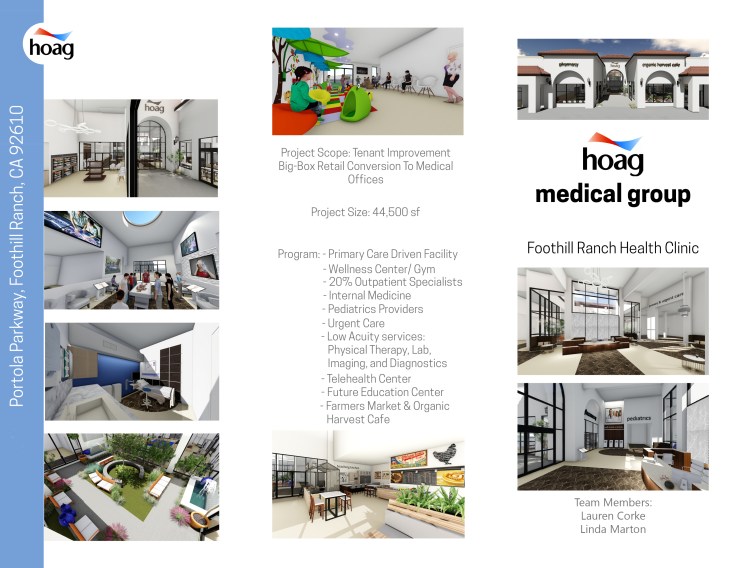
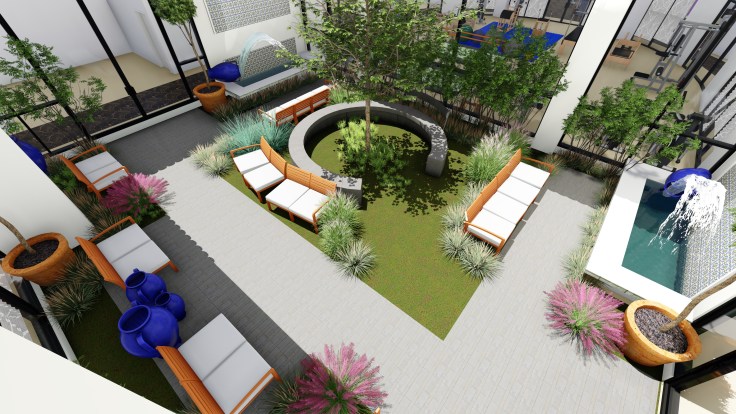
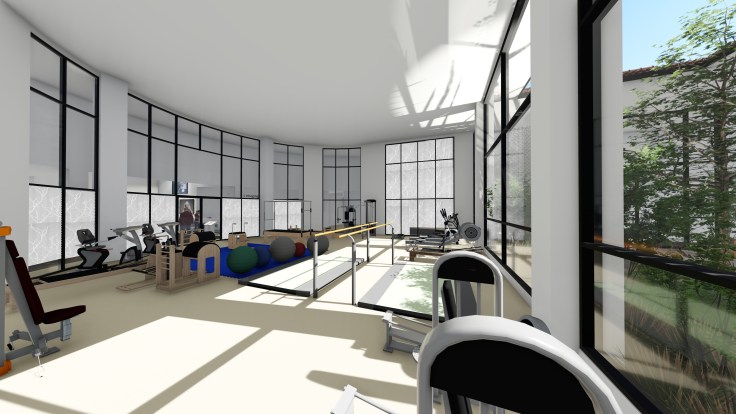
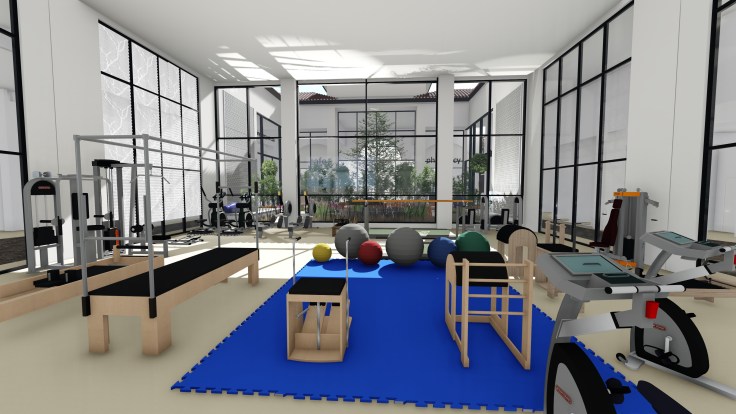
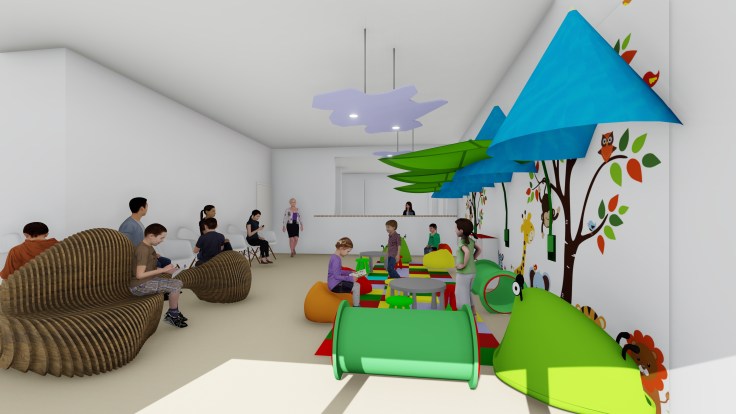
During the first four weeks, we were challenged to convert a “Big Box” retail space into medical facility (to provide various medical clinics along with primary care, pediatric clinic, urgent care, physical rehabilitation and other medical services for Hoag Health. This adaptive reuse project took place in Foothill Ranch, CA on a real site with a real 44,500 SF store – the neighborhood shopping center and surrounding area had Spanish Revival style restriction, therefore the proposed modernization had to blend in with this style. During lectures, healthcare planning experts presented their current projects, and talked about the basics of healthcare planning, how departments need to connect, how to achieve functional layouts and multi-functional, alternative workflow options.
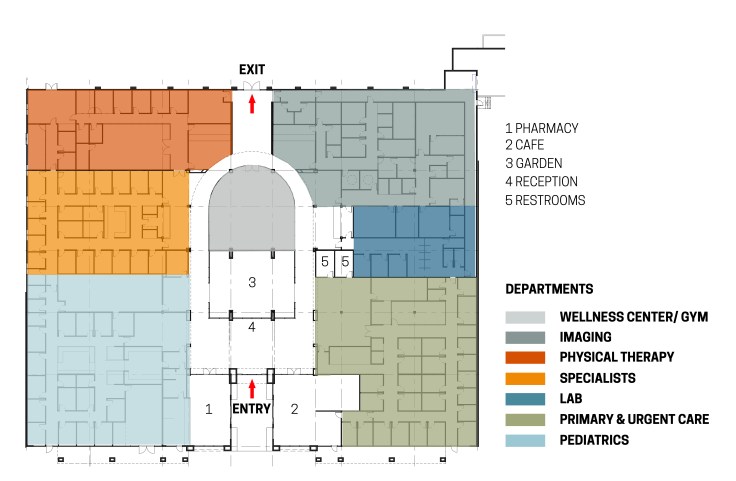
We learned about the departments` special technological requirements, security and earthquake requirements, regulation with OSHPD and CDPH. We learned how to research the site and surroundings, demographics, current and future development planning options, project founding and business model, branding and signage design.
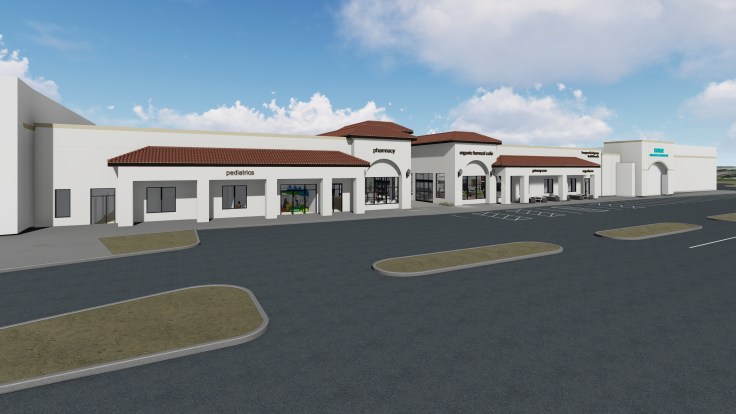
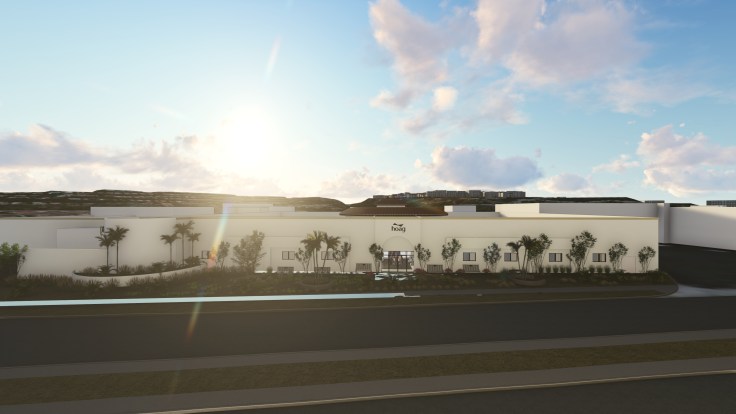
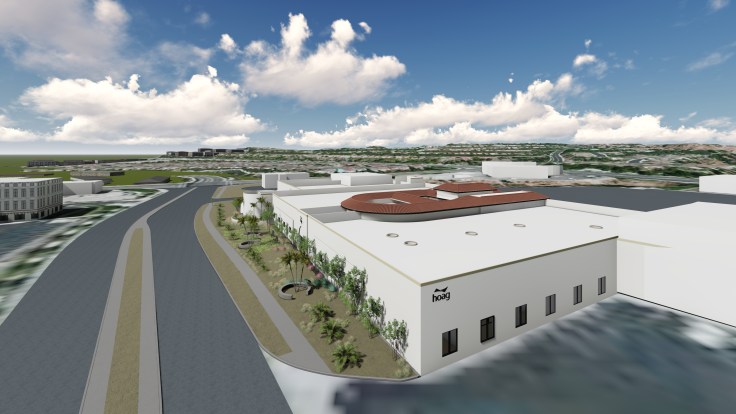
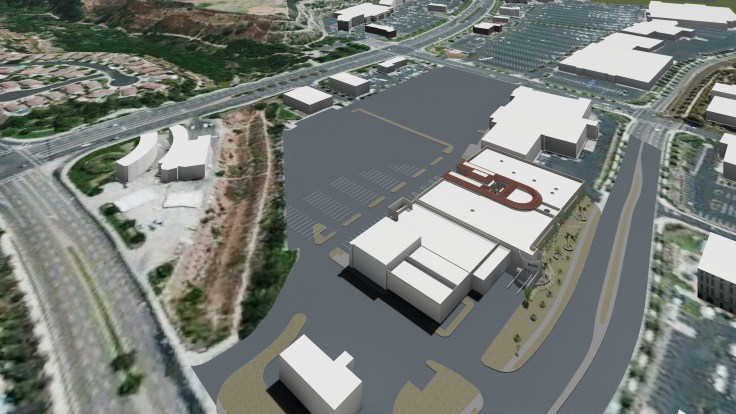
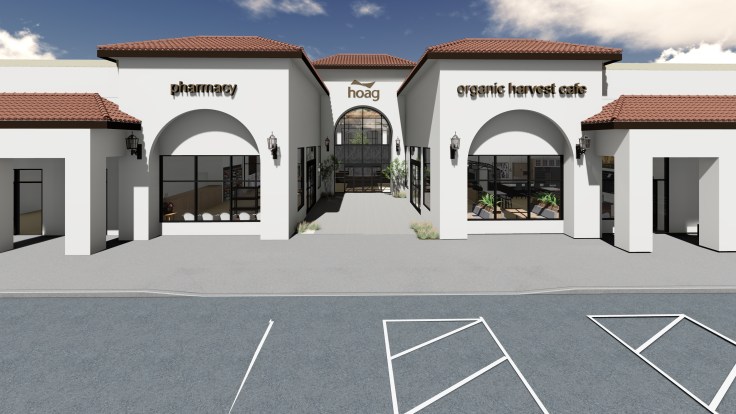

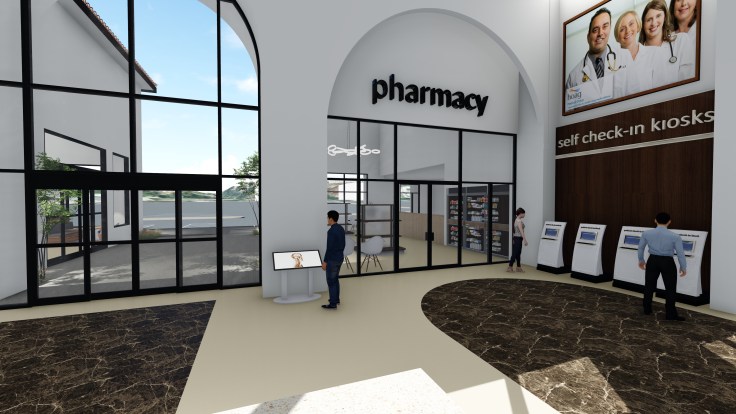
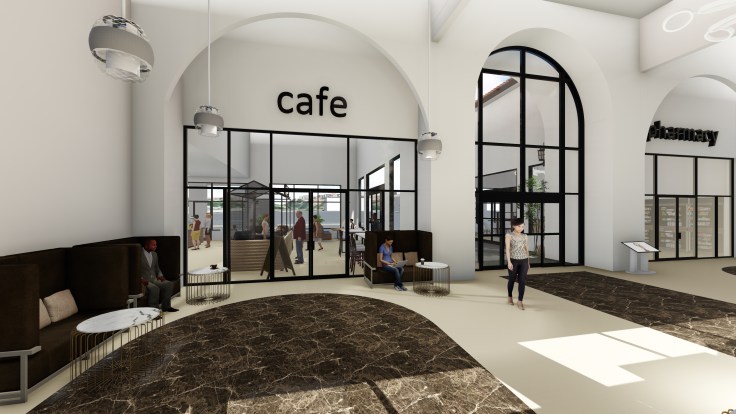
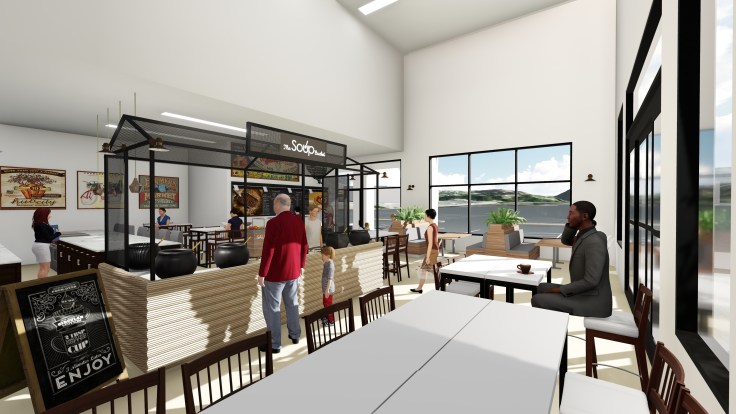
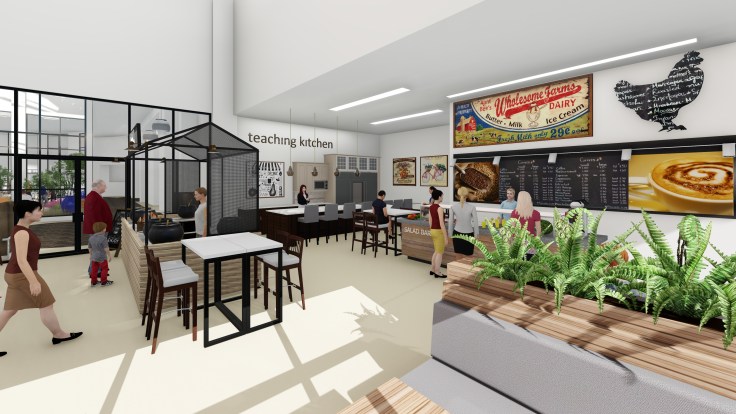
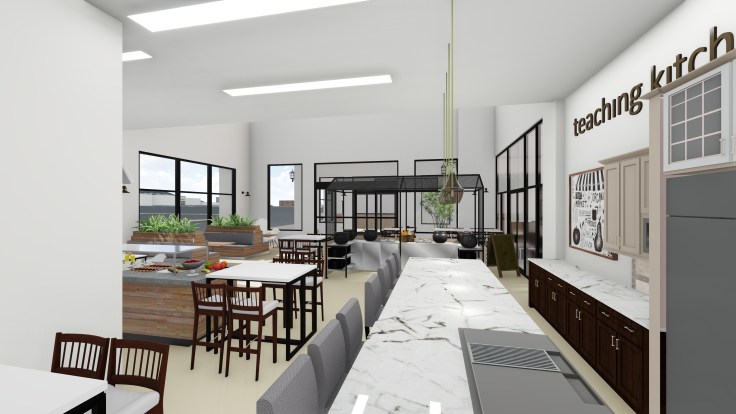


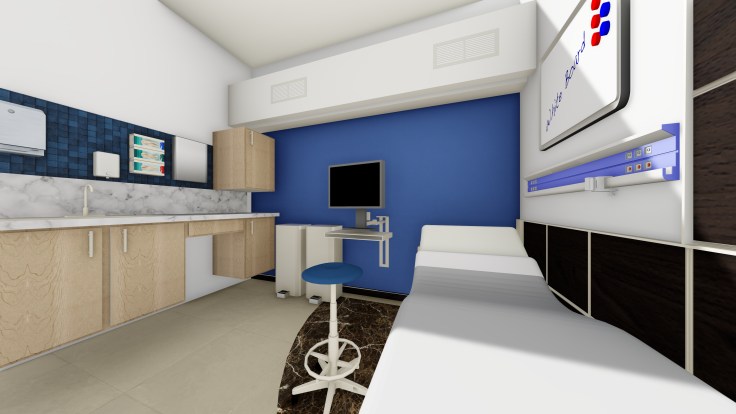
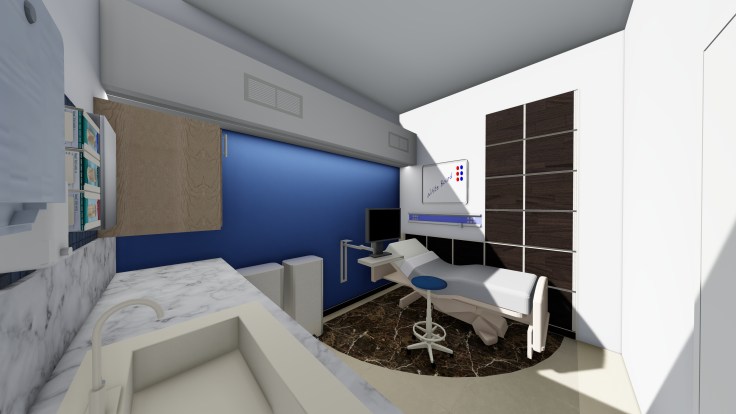
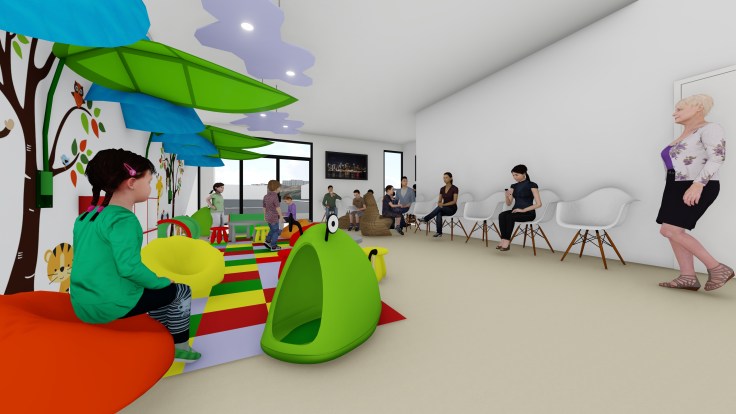
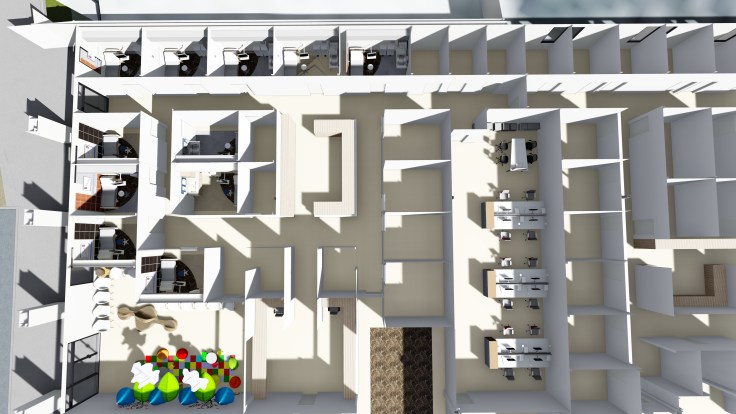
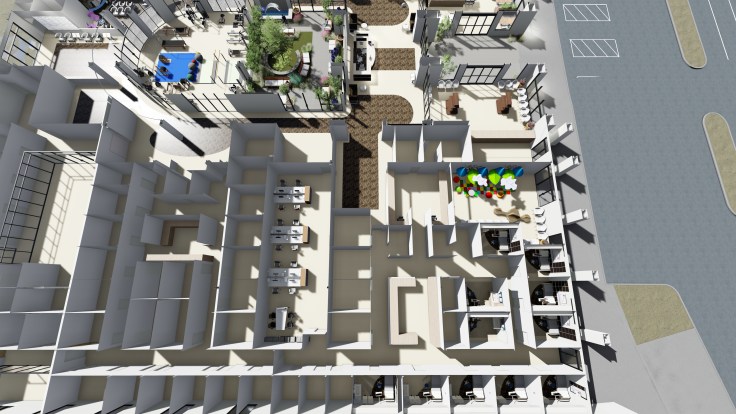
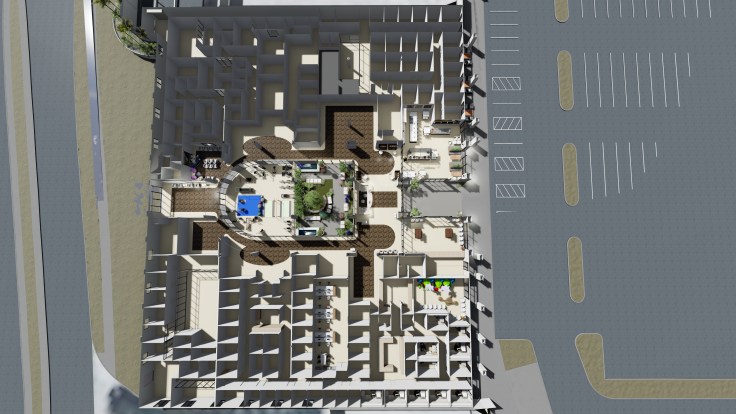
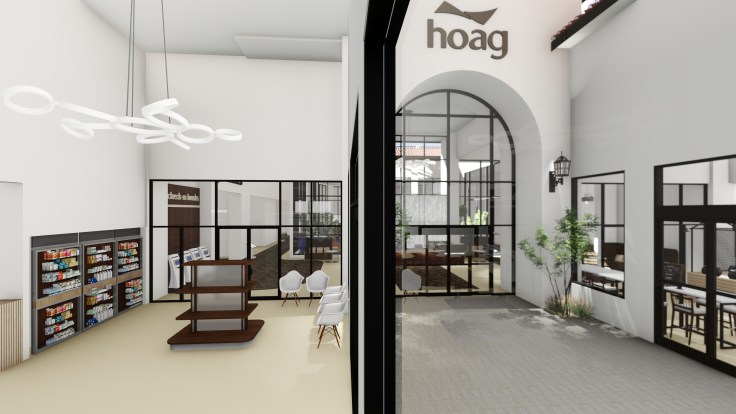
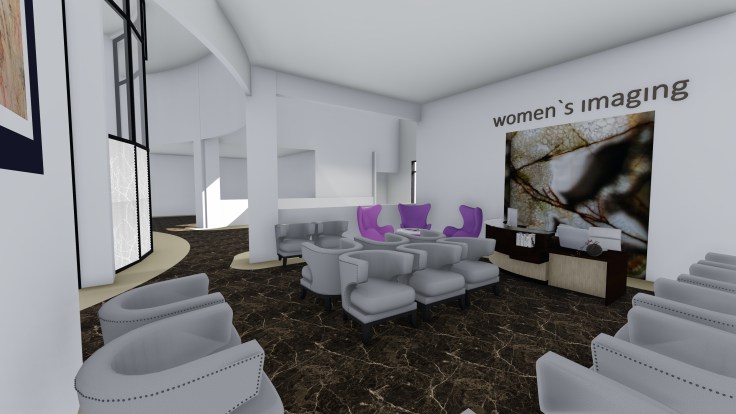
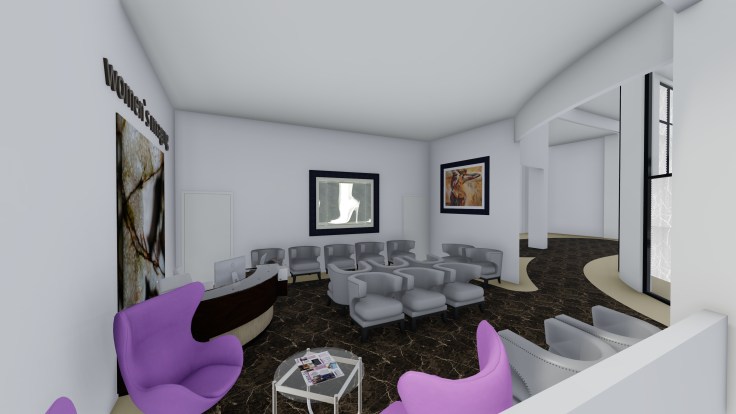
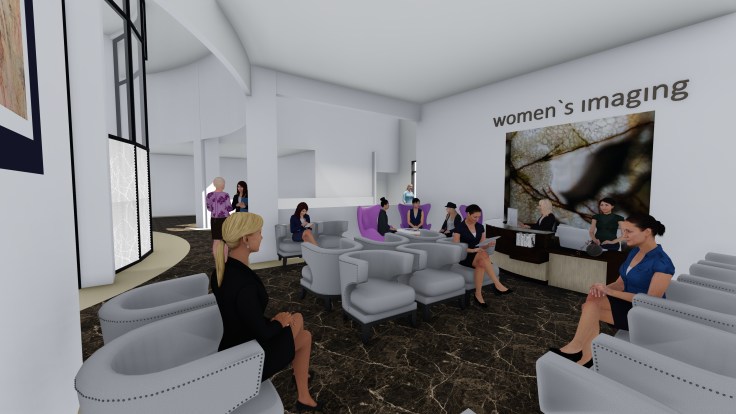
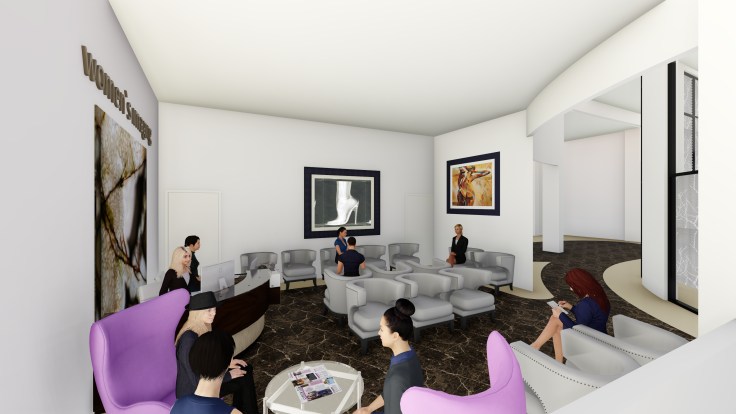
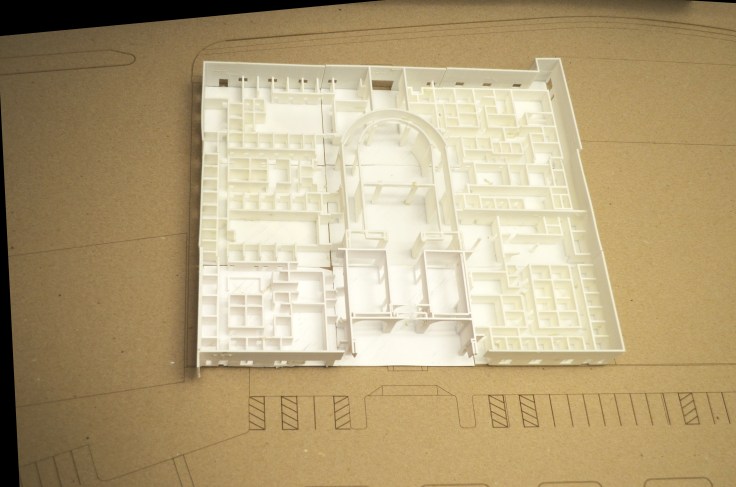
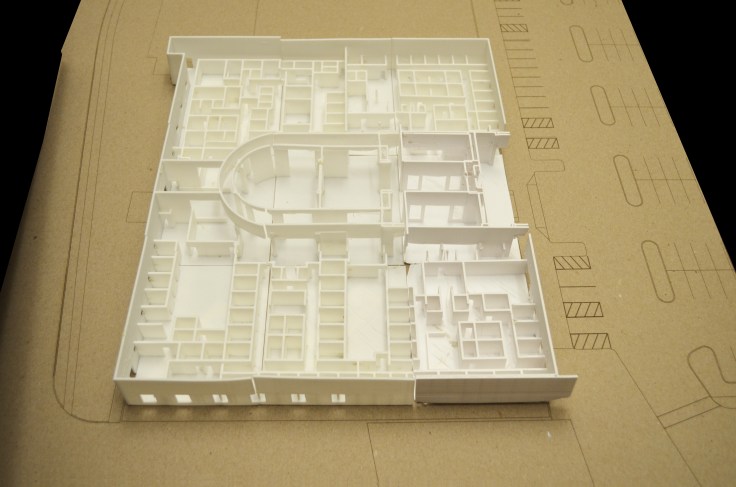
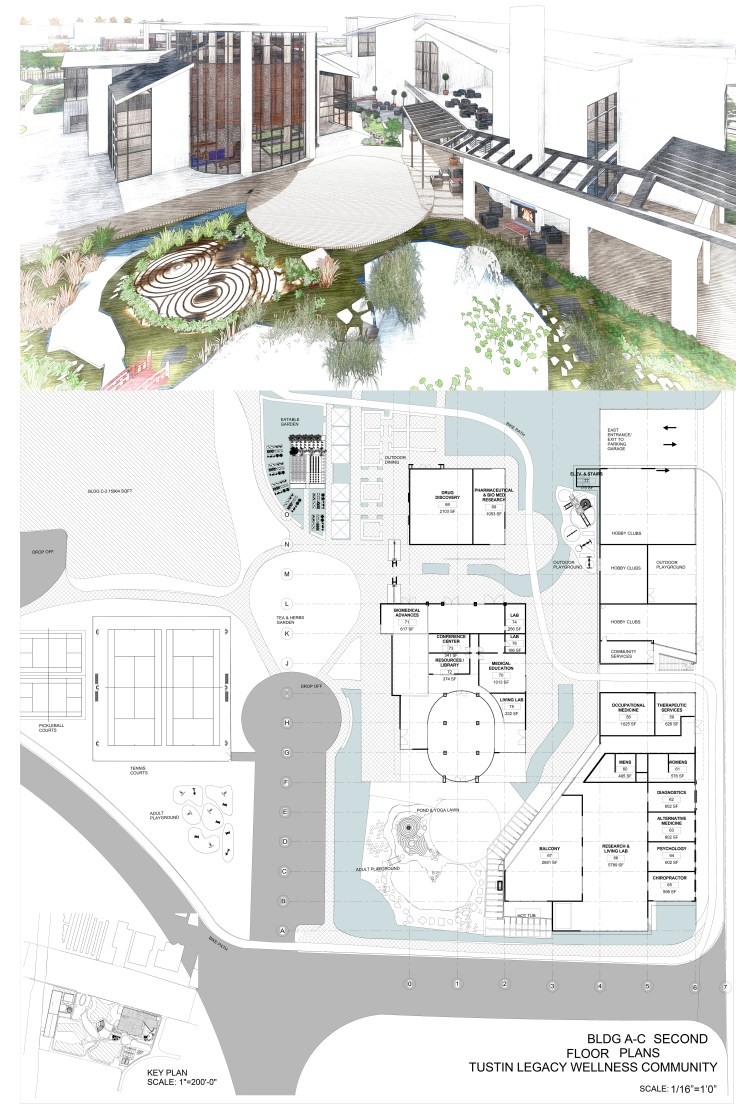
II. PROJECT: TUSTIN LEGACY WELLNESS COMMUNITY
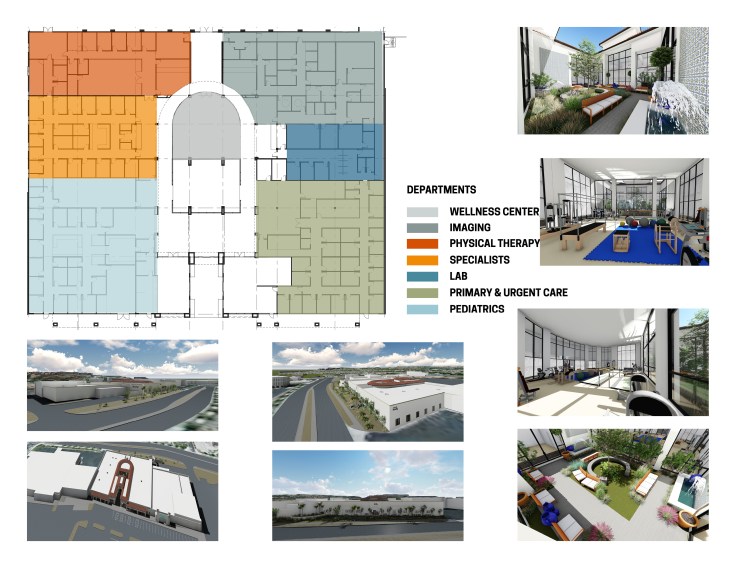
During the second half of the quarter, we were taught to design a Master plan for a given site to accommodate a Wellness Community and Urban Park. The Wellness Community had to be designed to facilitate healthcare providers, technology developers and researchers. The vision also included to design senior living quarters for: 1) Independent Living for those who would like to stay active while aging (55+) but stay in place in their current neighborhood 2) Assisted Living (85+) (memory-care and rehabilitation care – with skilled nurses per demand offerings, and in potential the synergies of clinical care, healthy aging research and health monitoring technology and innovation facilities) 3) at Home Living with Care assistance from the Healthy Aging Community Services Center (resources offered to walk-ins to the Wellness Center, Rehabilitation Facility, Social and Cultural Community Clubs, and Urban Park, on demand transportation services and technological rentals).
We were challenged to design multi-generational activities facilitating a community where inter-generational and community gatherings can take place to allow social and physical connectivity for retail, health, wellness, cultural, educational, and transportation services. This was a group project of five students.
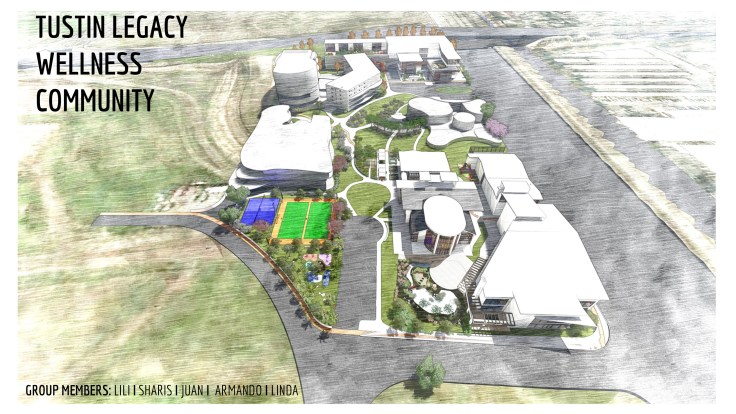
After we developed a Master plan, individually, we each had to design one specific area of the program.
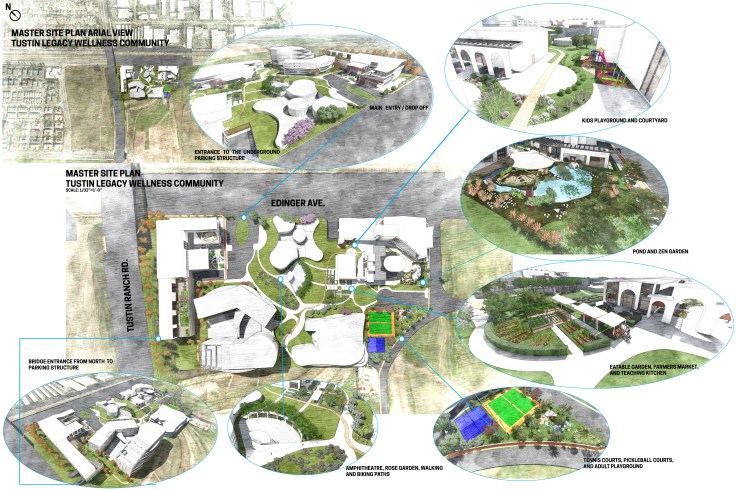
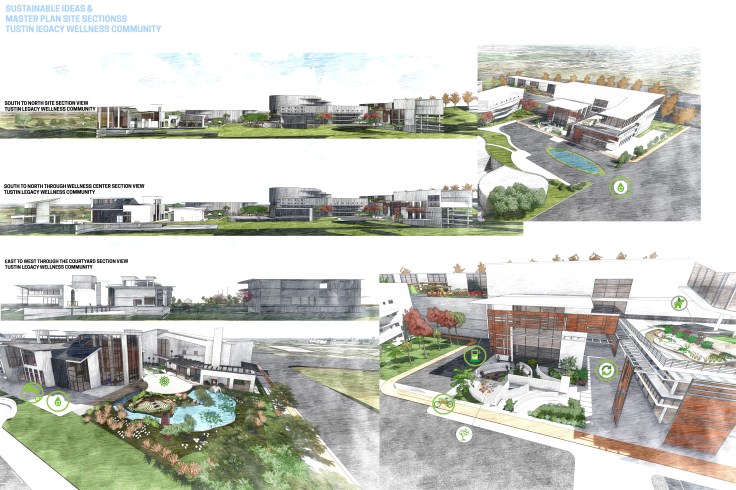
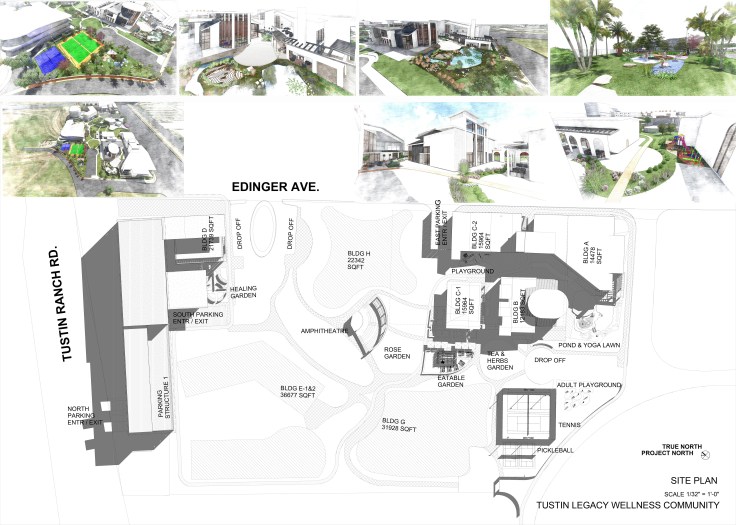
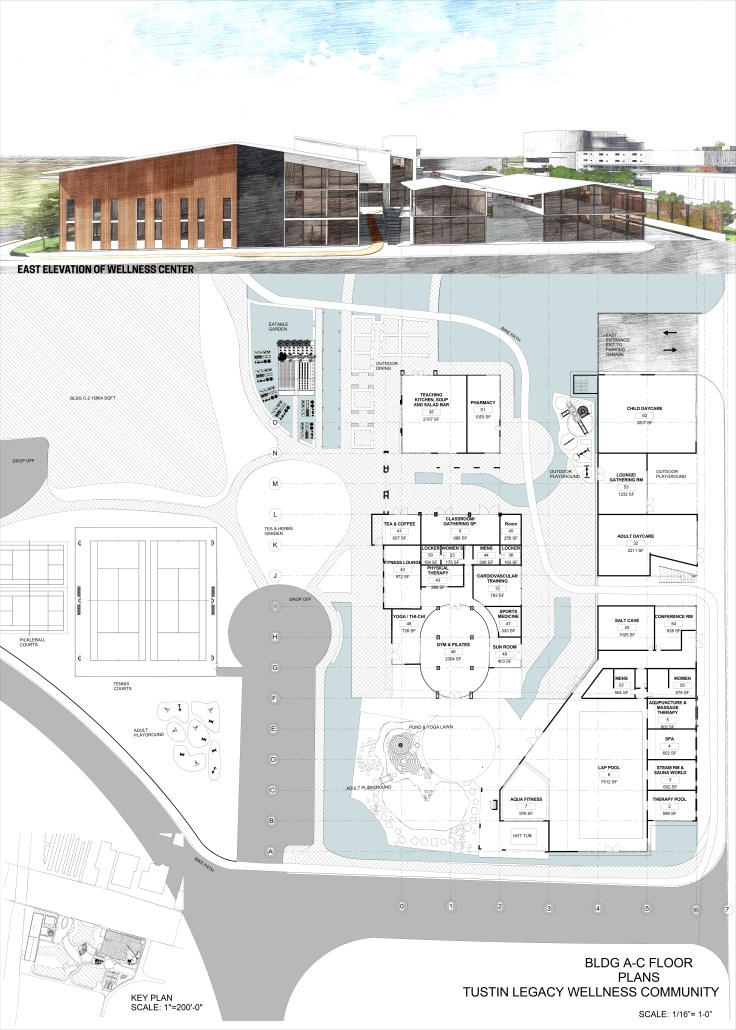
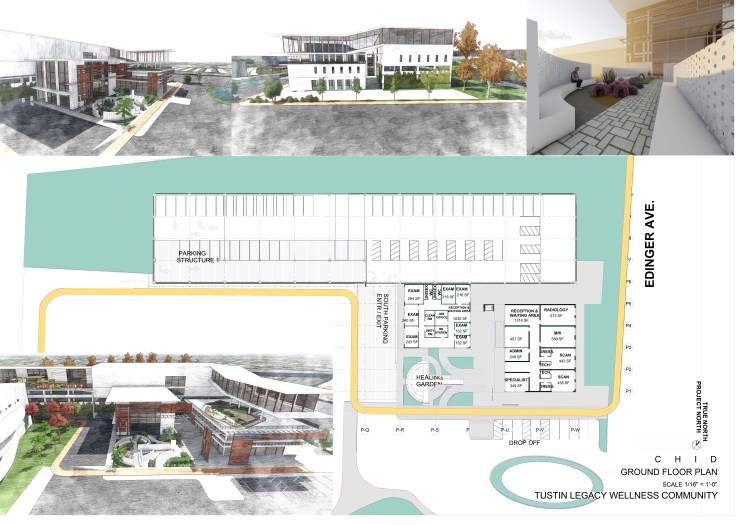
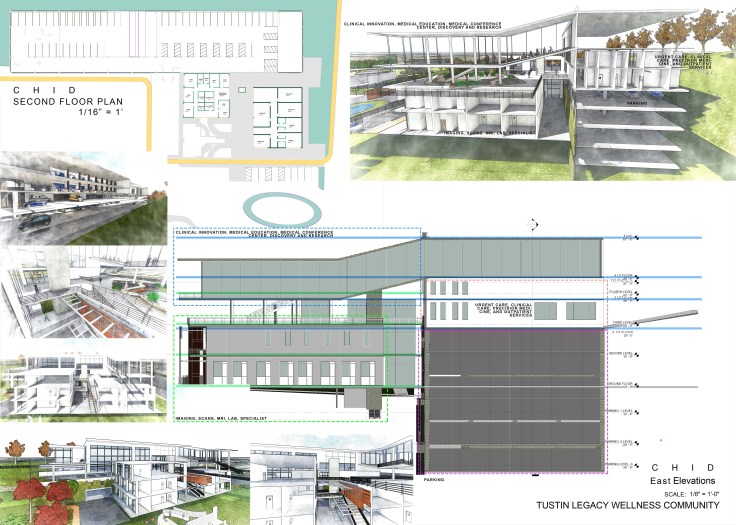
My focus on the project evolved around the Center for Health Innovation and Discovery (CHID): Clinical Care, Research Institute, Medical Fitness/ Wellness, and Urban Park design.
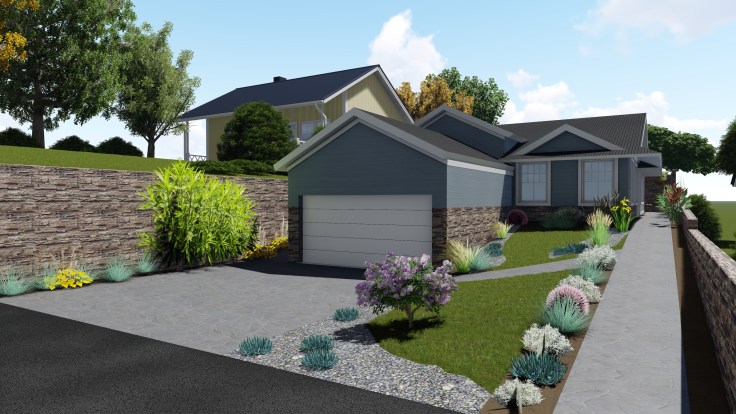
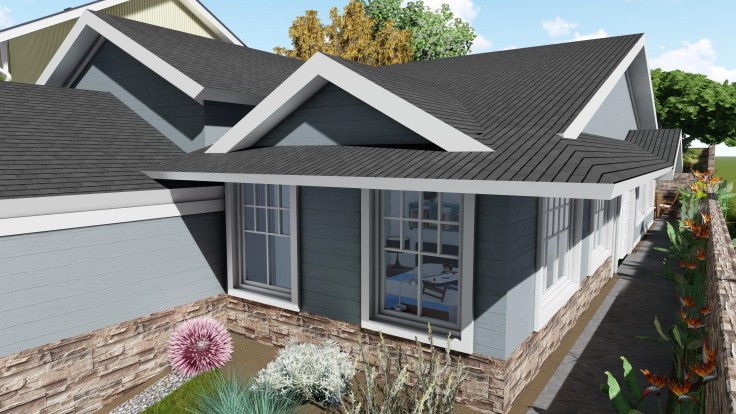
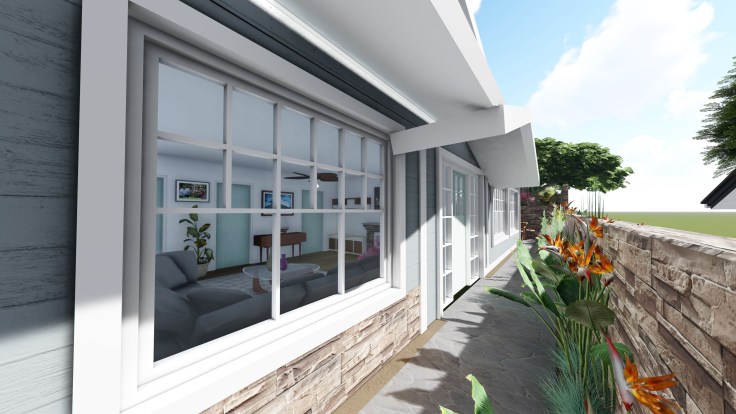
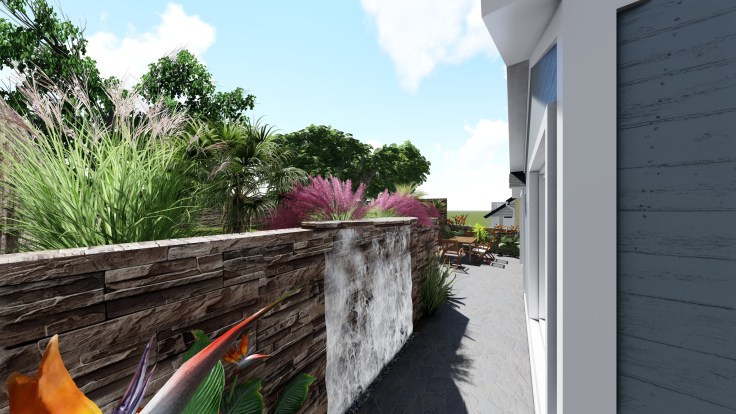
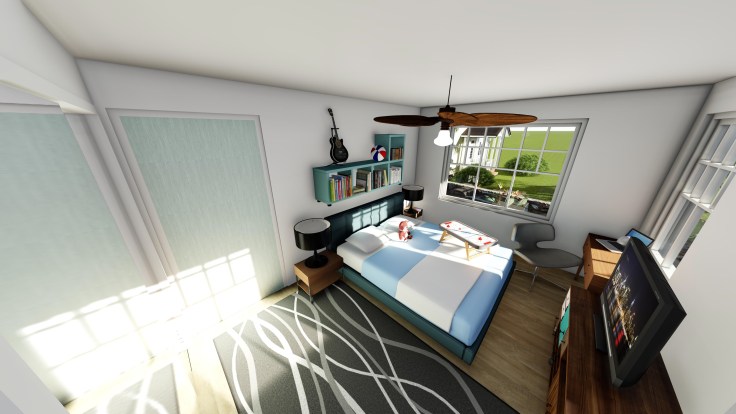
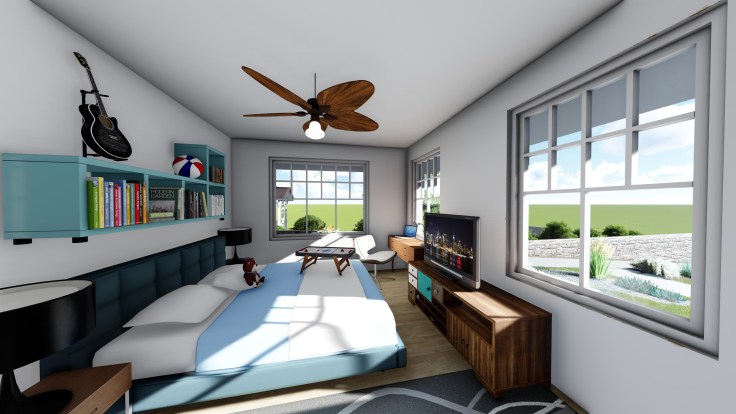
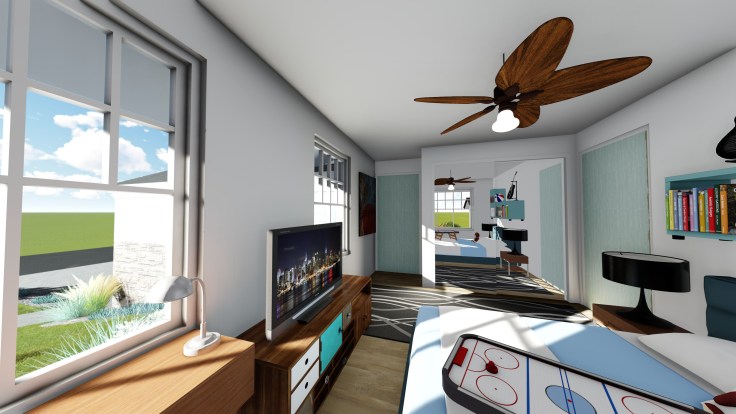
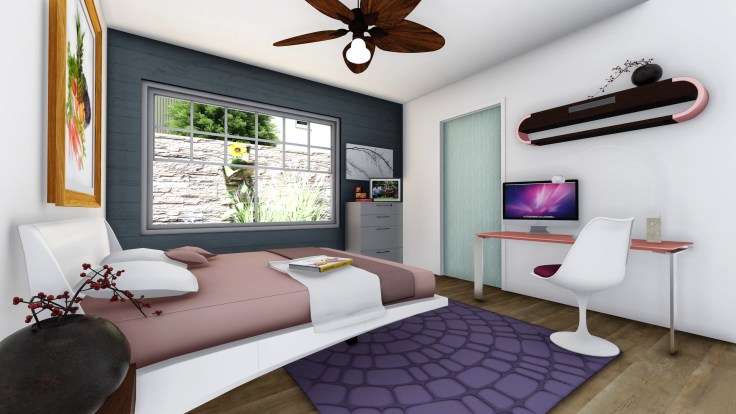
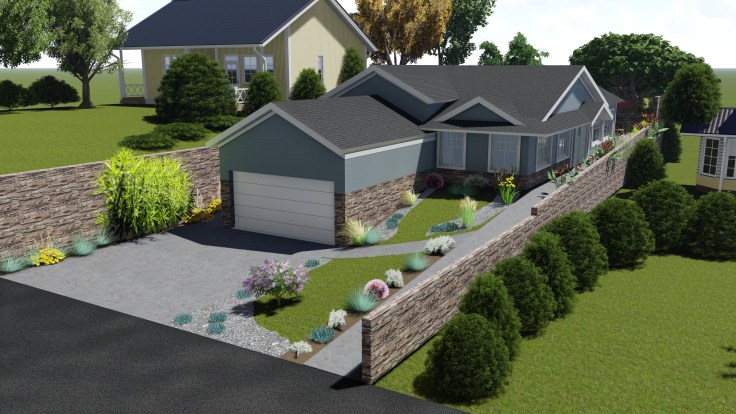
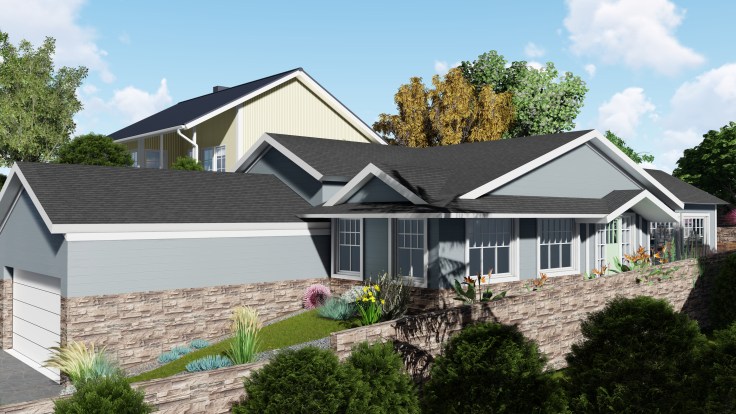
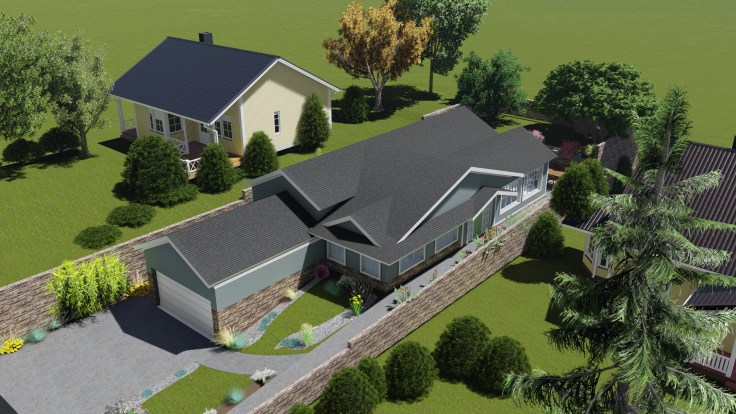
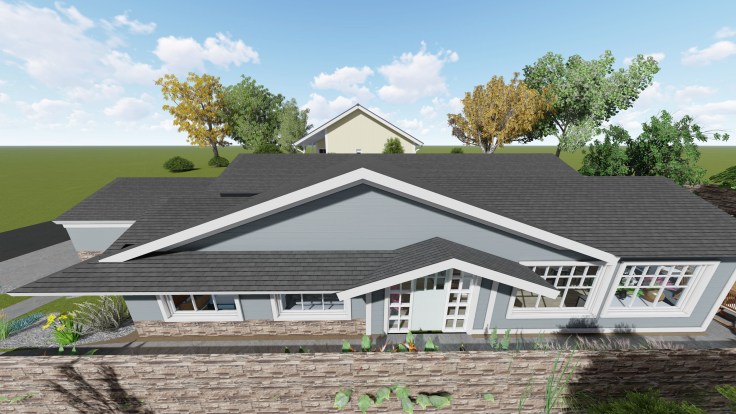
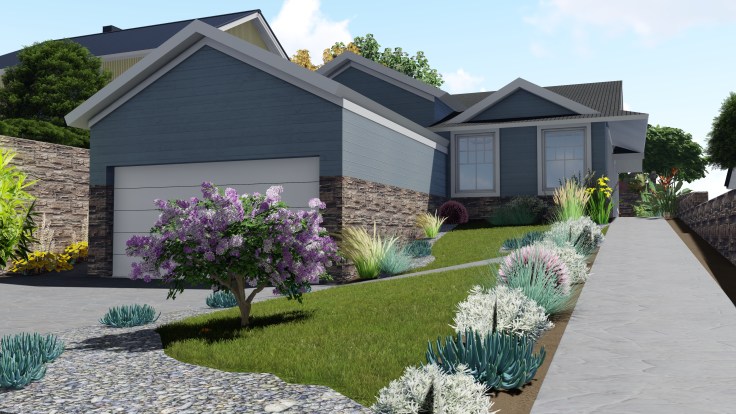
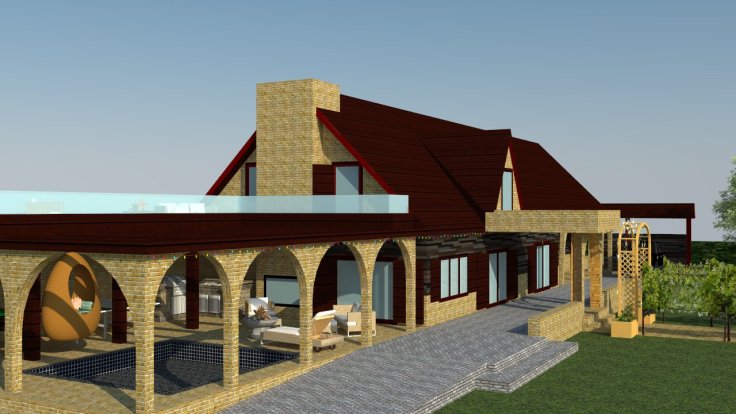
Visualization for a Single Family Home Remodel 2017
La Canada Flintridge, California







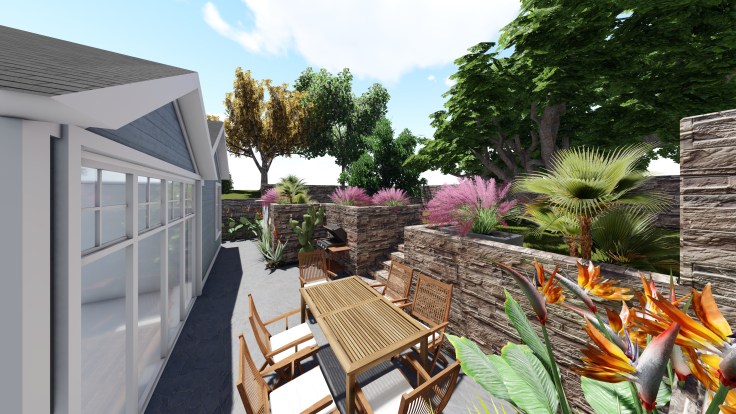

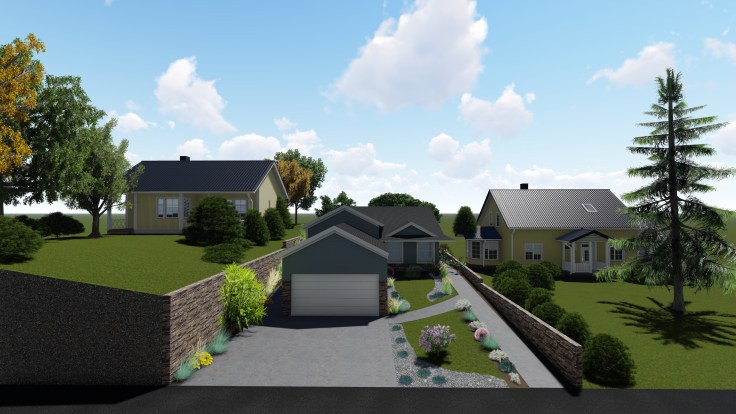
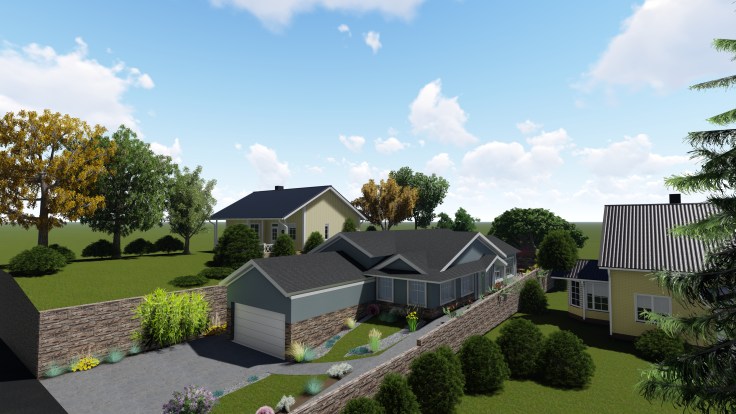
Design Development and Construction Documentation for West Hollywood Multifamily-Housing
School Project at Cal Poly Pomona Winter 2017 – Spring 2017 , MArch 2nd year
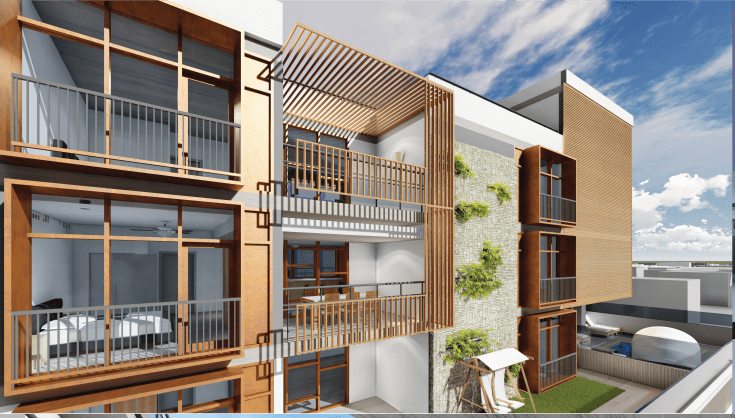 During the winter quarter of 2017, we researched a West Hollywood site. We were challenged to analyze environmental aspects and research building and city zoning codes. First, we designed studio, 1 bedroom, and 2 bedroom units. Then we explored different combinations of these three types in a most efficient and practical way. We developed some configuration and finalized our circulations. When our 3d model was finalized I remodeled my Sketchup model with Revit.
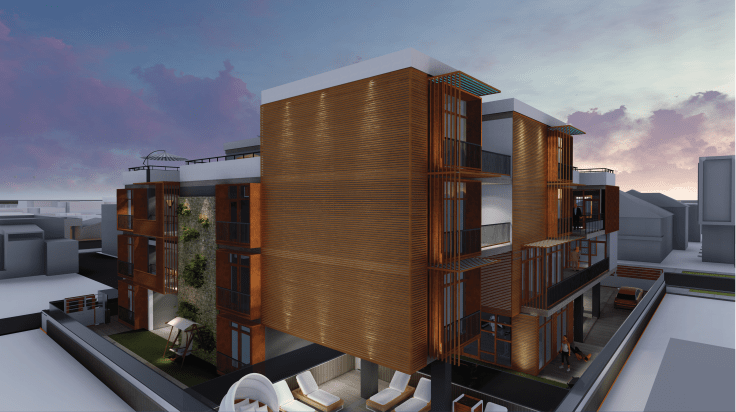
This model served as a good base model to further develop the project the following quarter, Spring of 2017. In our studio class, we focused on design development such as adding plumbing, HVAC and mechanical system, roof drainage and gutters, lighting, framing plan. We also generated 3d details (and previously to that hand sketched a lot of architectural details from real life experience to be able to study assemblies). While the studio was developing a design development package, our BIM Revit class was working on a Construction Documentation set. This really helped to finalize materials, and to be specific about every small detail that has to be taken into consideration to help plumbing – mechanical – and electrical components to collaborate with the architectural design.

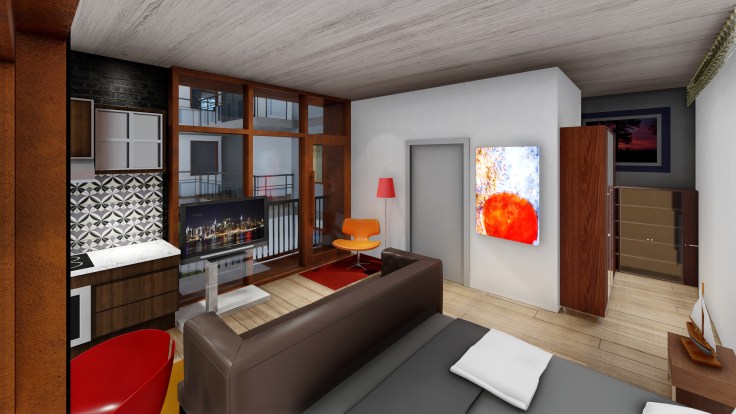
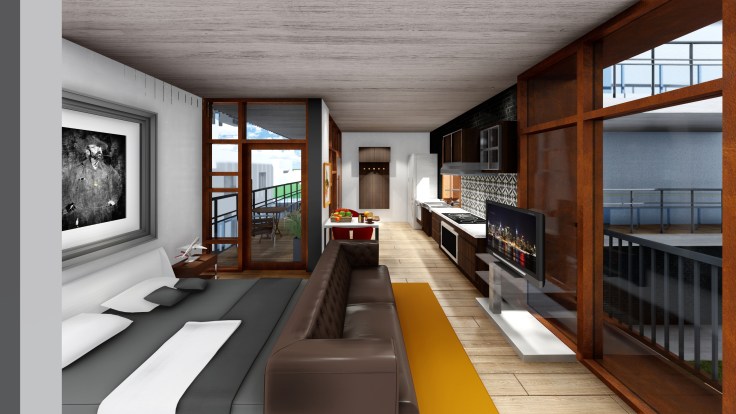
My project is called WEHO Garden terraces because I wanted to create a project that maximizes outdoor spaces (private and public terraces). Each unit has an East and a West, or a North and a South terrace. This allows cross ventilation, and as well as morning and evening outdoor lounging experiences. The little housing community was designed in such a way that the circulation path throughout the building takes us to public gathering terraces.
Below, a group of images showing a two bedroom unit that was designed for families with children.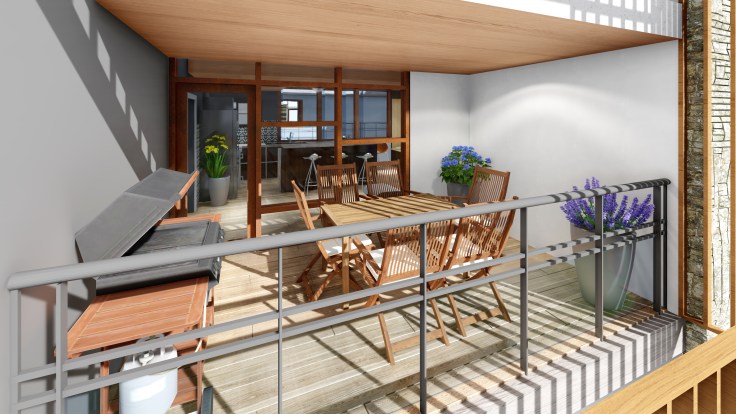
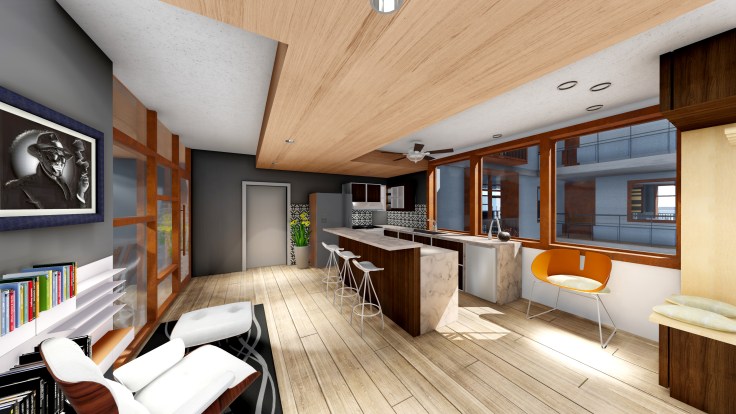
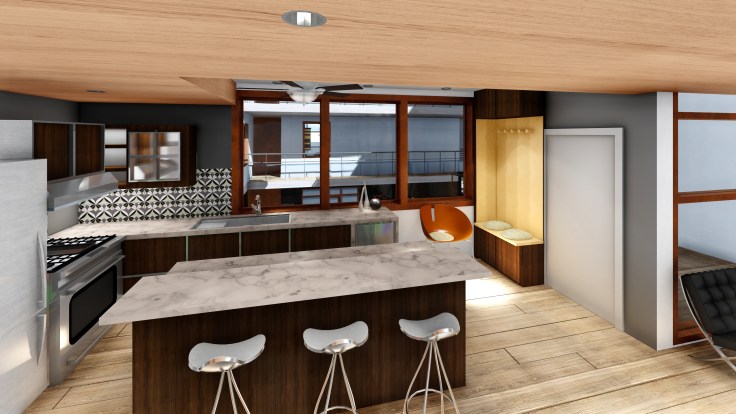
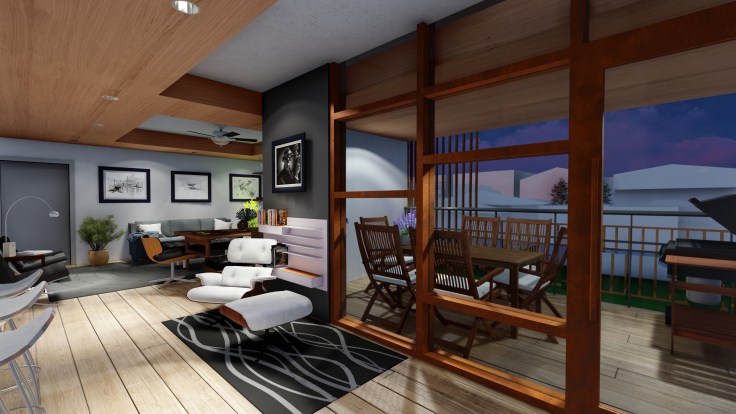
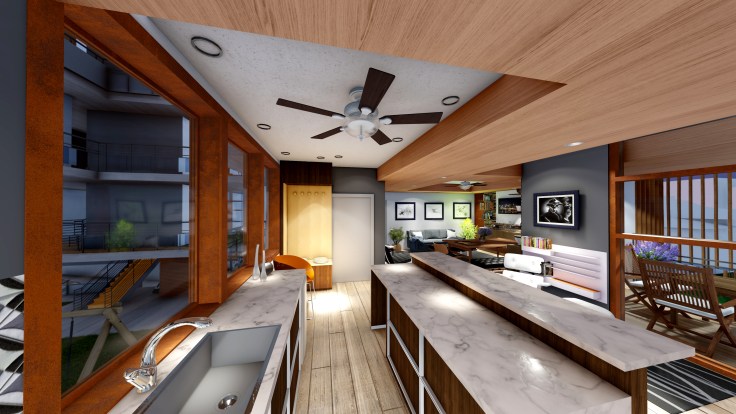
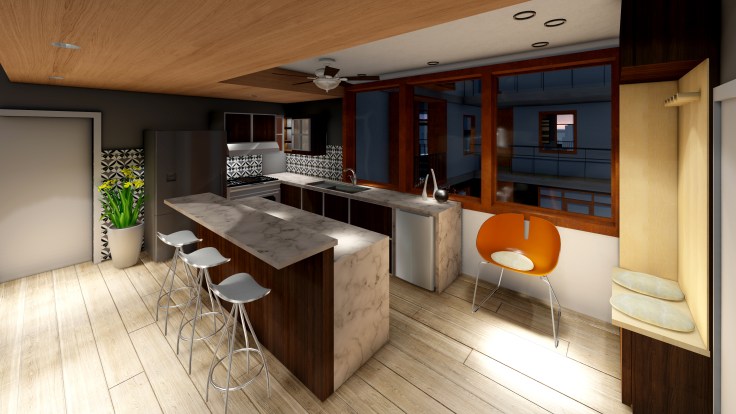
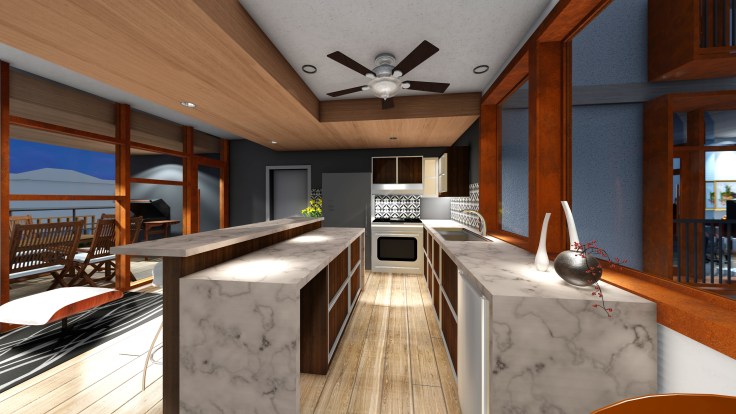
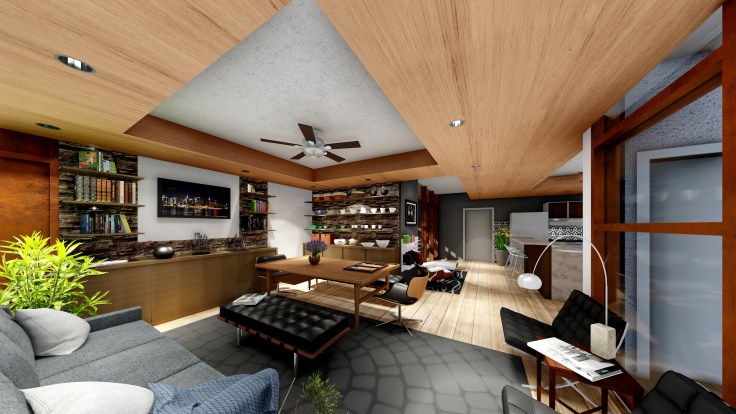
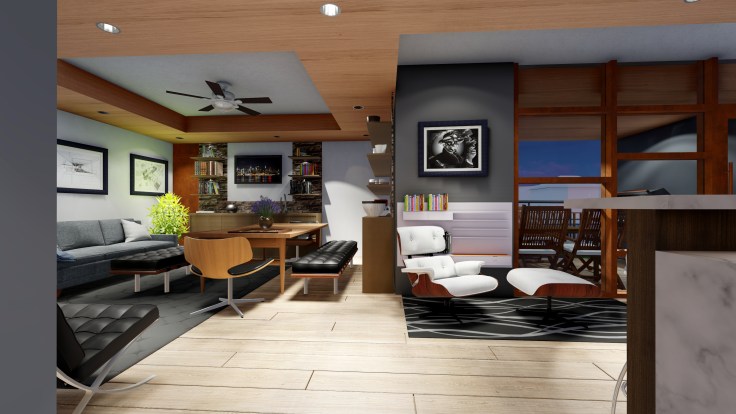
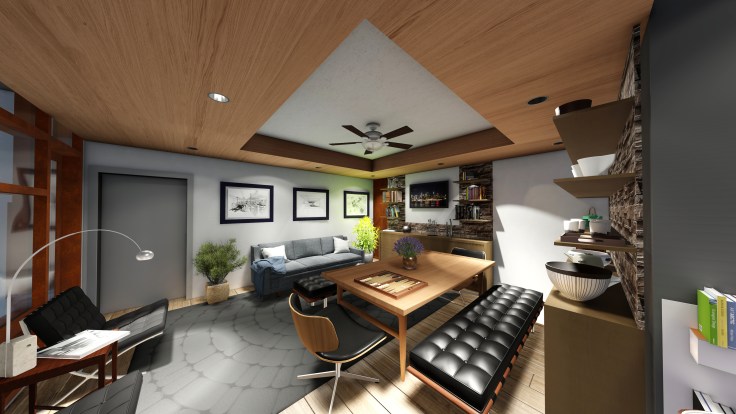
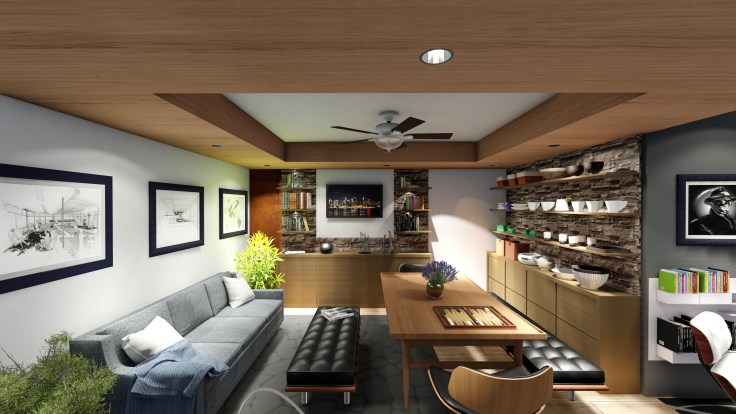
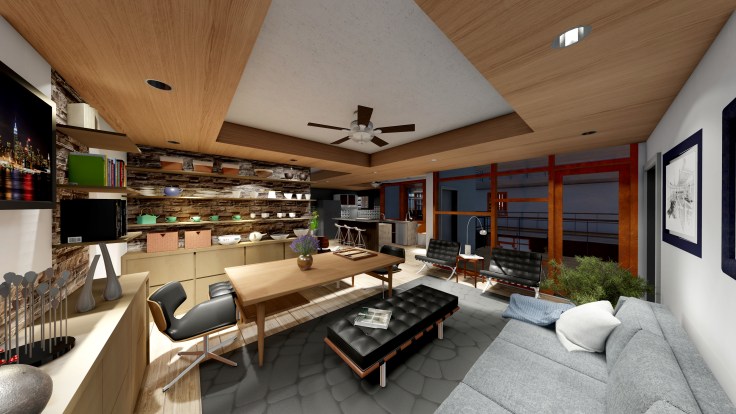
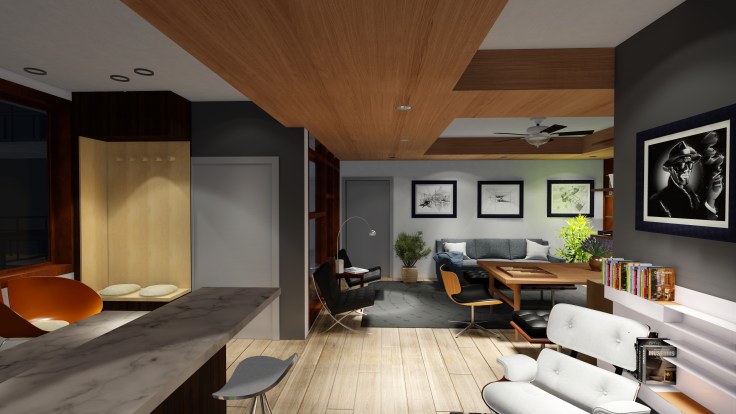
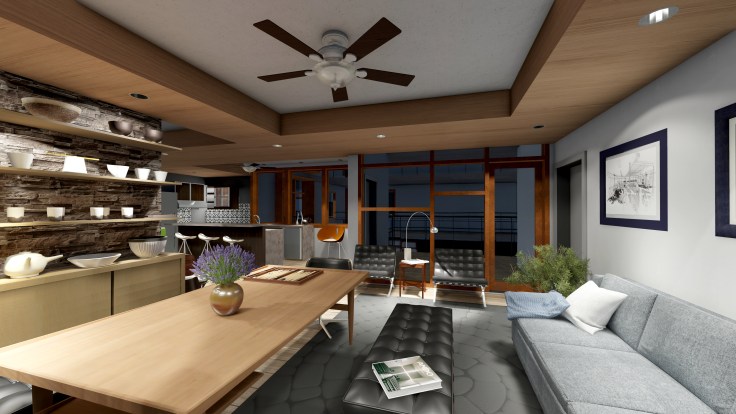
Below, a group of images showing a studio unit that was designed for single active adult or an elderly couple. It is a downsized unit but comfortably fits every need. Also, every unit was designed to adapt accessible use.
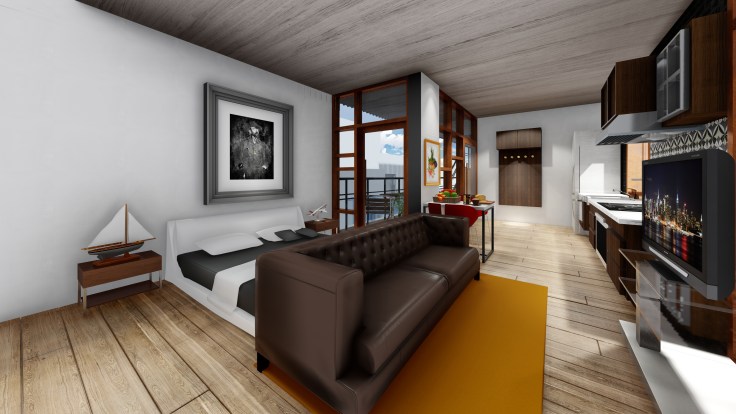




Concept Design for The RMV Reserve at Rancho Mission Viejo
School Project at Cal Poly Pomona, MArch Fall 2016
One Central Idea
Introducing User to Different Transitional Tectonic Experiences
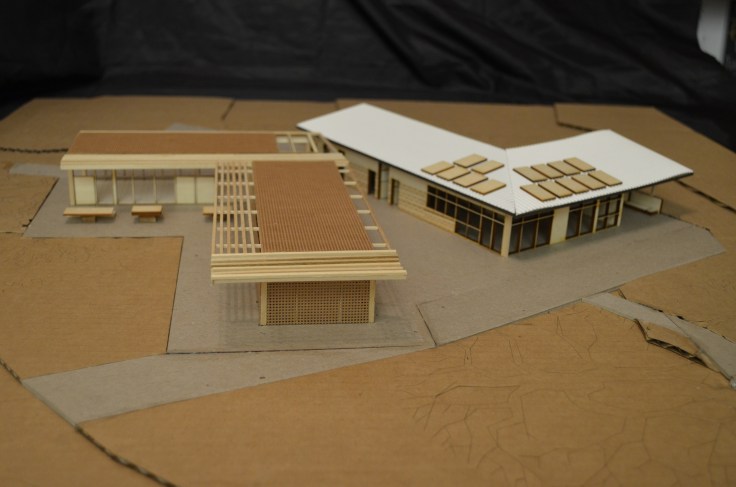
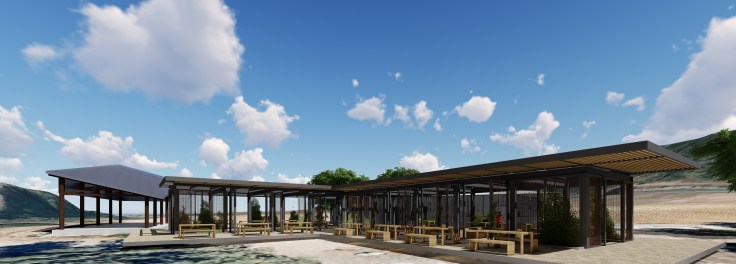
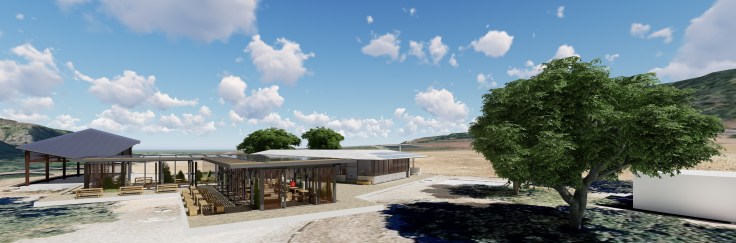
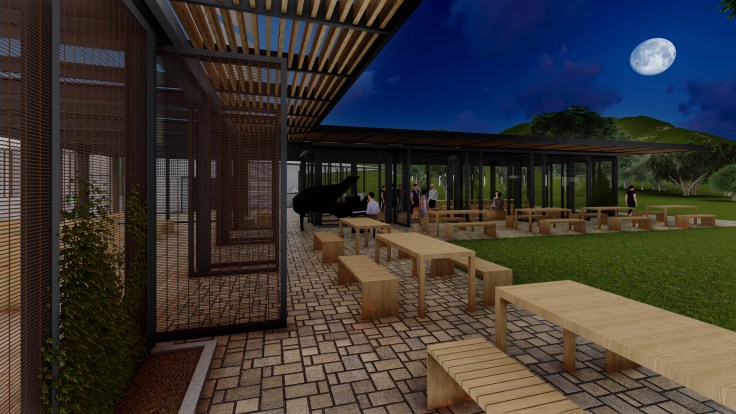
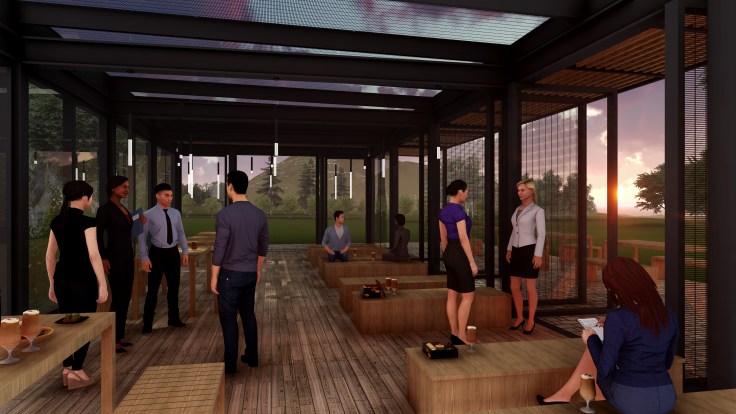
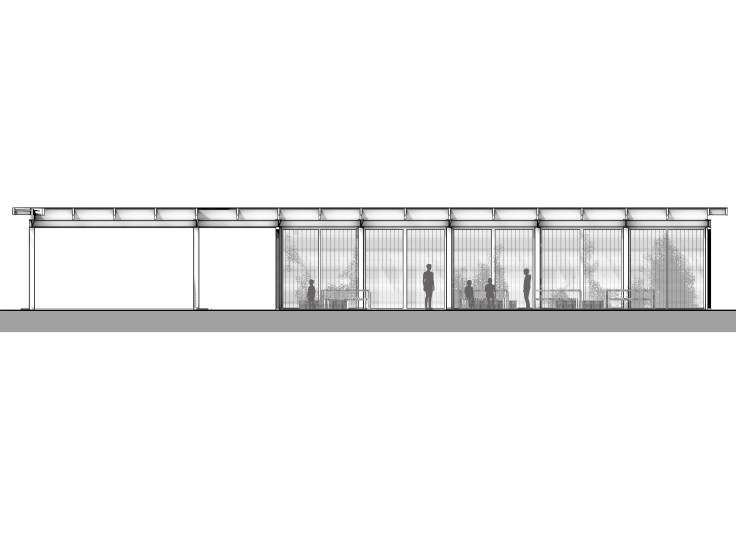
The RMV Reserve site lets the user experience two types of existing tectonic structures: shed structure (roof with poles) and a ranch style house (wall, roof, and envelope – all enclosed). Therefore, as an addition, the Interpretive Building extends this experience for the visitors with two transitional structures which are in between. The classrooms are constructed of steel moment frame with translucent glass and a shading screen all around – this allow students to see outside (360 view of the surrounding nature) and depending on the weather conditions can be fully enclosed or open ; the exhibit with reception and services are a high mass concrete with slopped corrugated metal roof ranch style building but with same type of glazing as the classrooms this condition provide more enclosure but still with a lot of daylight and appropriate shading.
Relationship Between Landscape and Building
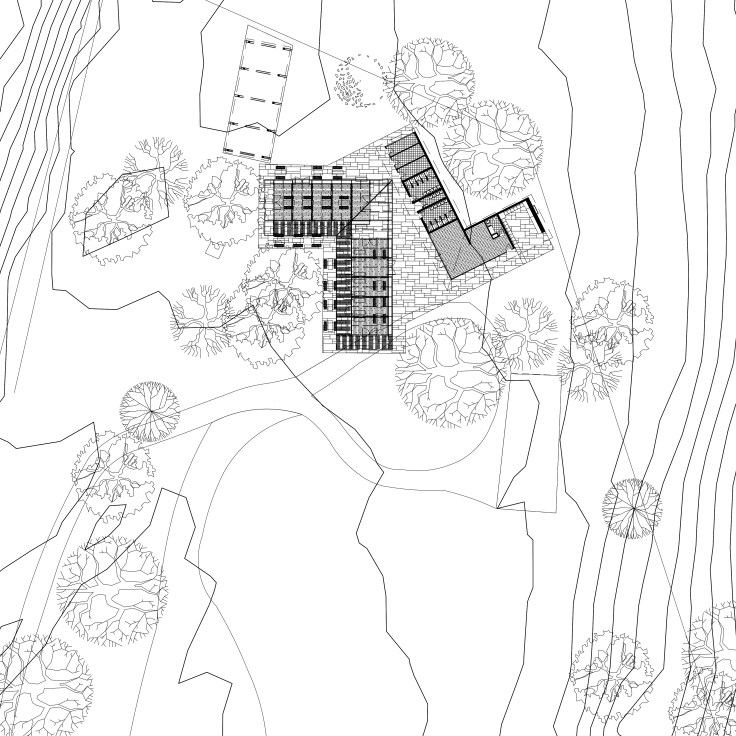
The relationship between the landscape and the building components are very supportive each other. On the North side, the building is tucked behind trees to be protected from cold winter winds and on the West side other trees shading the outdoor teaching room in the afternoon. The classrooms reach in toward the center of the site to extend and connect education with nature and provide a closer experience to nature. The way the new building and the existing ranch house surrounds the old oak tree, undeniably celebrate the presence and main focal point of it. The interpretive building was oriented with its two L-shape to open up towards views: SE and SW mountains.
Architectural Intent
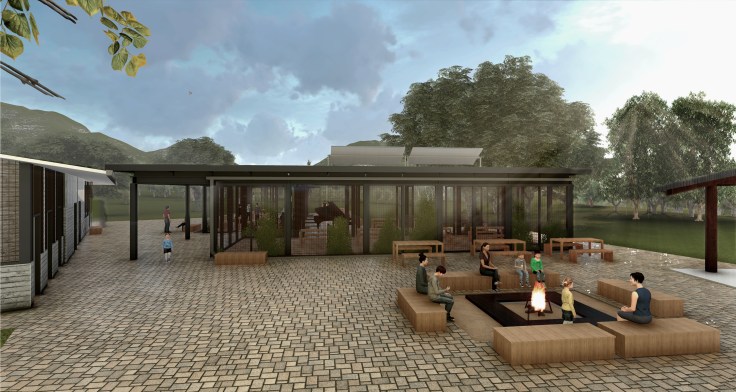
The architectural intent between inside and outside is to blend one into the other. The interior spaces extend to nature with their porches and courtyards. Passive cooling effects provide thermal comfort in the outdoor gathering spaces near the buildings with large overhangs and vegetative green walls (screens).
Architectural Parti
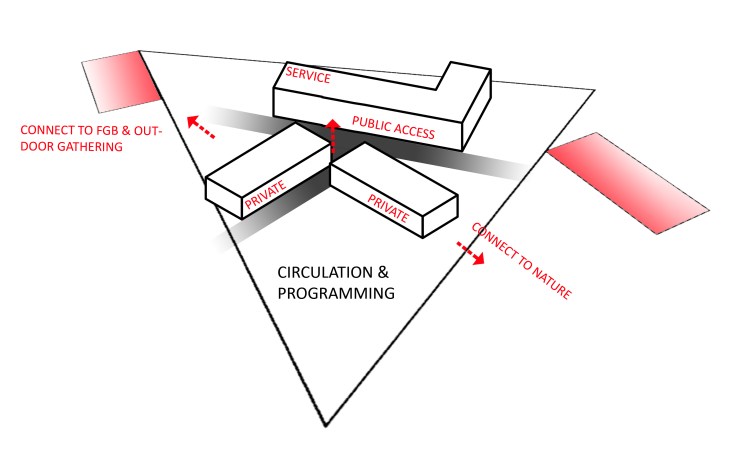
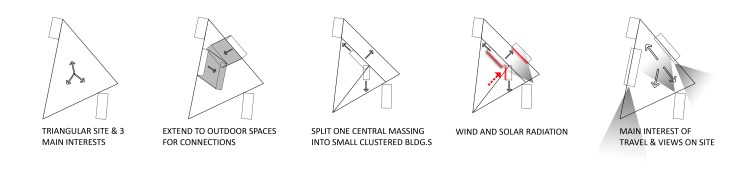
The Architectural Parti shows equal importance to focus on to create: a user interactive, nature influenced, sensual, relaxing atmosphere where tectonics are communicated clearly to allow a greater understanding of composition of structural elements and integrated sustainable energy features. This tectonic approach introduces visitors to ranch style materials which reflect local identity as well.
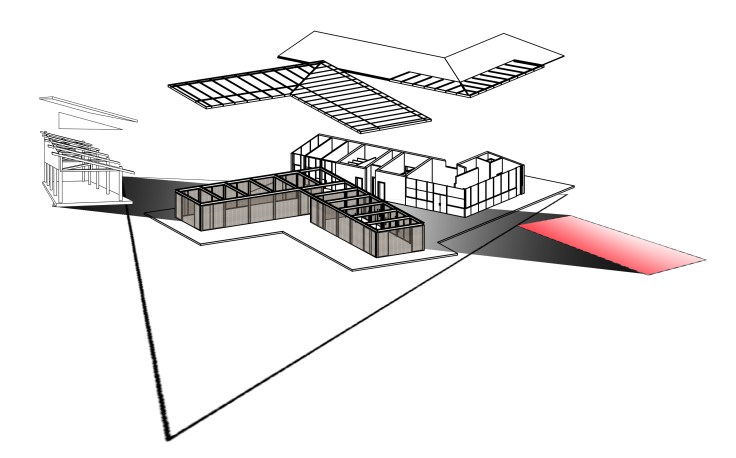
The organization happens to take shape in two L-shapes: one with a little bit more private rooms to provide children uninterrupted learning experience and the other with public exhibit and service functions. The circulation is generated with a straight linear pathway from the ranch house to the existing Frank Gehry building by placing the two L-shape buildings back to back with each other. These create an interesting funnel tunnel which narrows down as it gets closer to the Fank Gehry building to create a wow effect.
There is a secondary circulation path between the classrooms from the West towards the East which was created with intent to generate proper wind speed (pressure) for natural ventilation
between the two buildings as well as through the classrooms itselves. (Main cooling winds are coming from SW during hot summer months.)
The space making is reflected in the sections: outdoor and indoor spaces are mirrored, they are each other`s extensions. Circulation is taken outside to reduce indoor spaces. Porches and courtyards are connecting buildings together. They are generous and comfortable gathering spaces. Structures of the two L-shape buildings reflect the program: lightweight tectonic structure clearly separated from the heavy concrete solid building – one emphasizes the translucency between inside and outside, a better transparent transition for students for educational purposes to enable an easier connection with nature; while the heavy component emphasizes a connection to earth: high mass, more insulation, providing utilities and mechanical systems for operation of the whole center – a main supportive core.


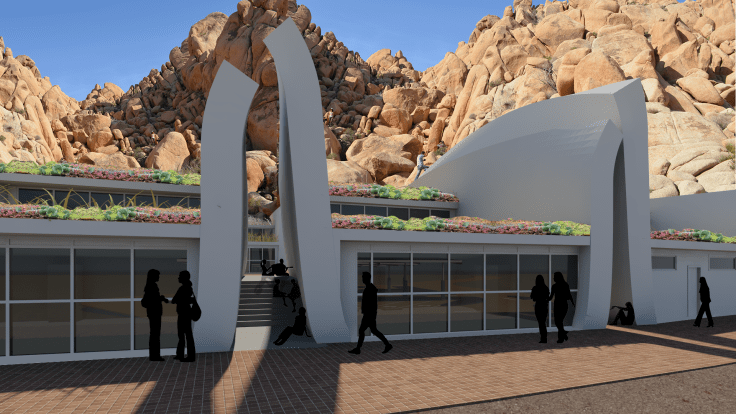
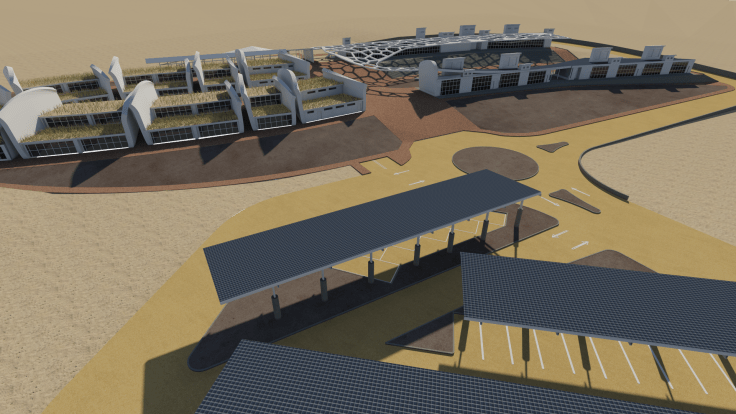
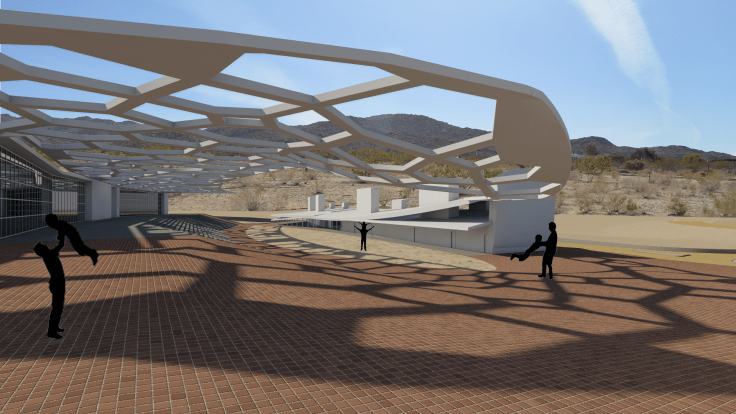
Residential Environmental Science Campus Concept Design for Joshua Tree National Park – school project, Cal Poly Pomona, MArch Spring of 2015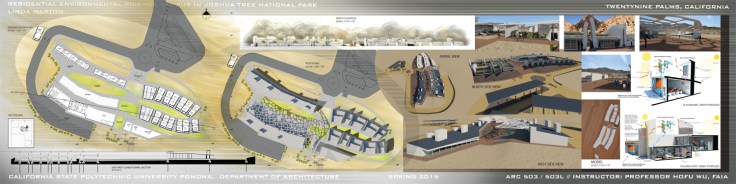 Green Design Strategies:
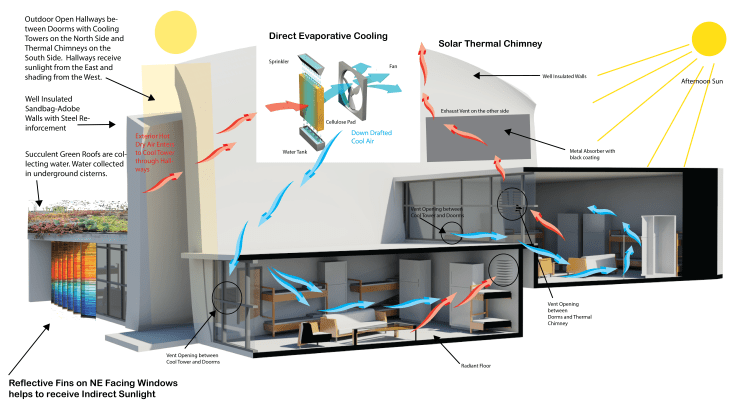
- Harvesting rainwater on green rooftops of housing units and permeable pavements throughout walkways, driveways and the parking lots.
- Collected water stored in underground cisterns, and reused for irrigation and non-potable water usage (flushing toilets).
- Solar panels mounted over daytime activity buildings` rooftops such as classrooms, dining hall, library/media center, and administration building.
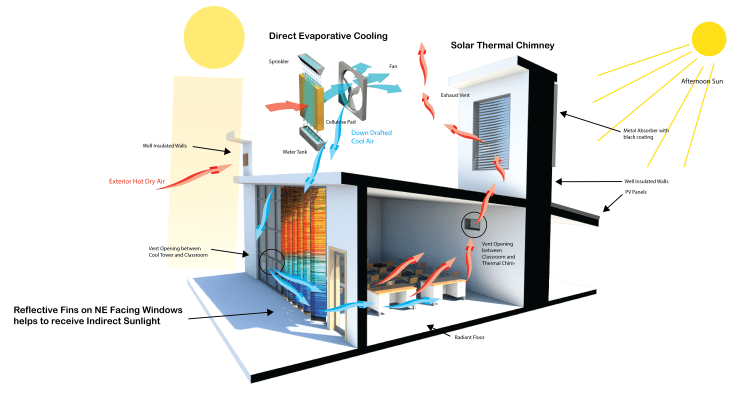
- Direct evaporative cooling system combined with thermal chimneys at housing units and classroom buildings for daytime cooling over the summer months.
- Trombe wall system used throughout the project for insulation against temperature drop in the desert.
- Reduces the need for space heating.
- Automated (programmed) operable window system would help flush hot air out of spaces during night time. All buildings designed to have NW facing window facades for this purpose.
- In order to increase natural daylight in all spaces NW facing windows would be combanied by reflective vertical louvers. (i.e. Classrooms, housing units, dining hall, administration building, and media center/library.)
- Structure of construction and material proposed:
Reinforced framed system within walls combined with local sand/earth bags, sprayed in between (reinforcement and sandbags) and outside with adobe clay-concrete mixture (with an engineered ratio) that would provide well insulated and well-engineered walls for each building.
Maintenance free (never need sealing)
A golden brown natural color that can be combined with local native tribes` motifs painted on exterior walls.
Environmentally friendly in materials, production & home energy conservation
Completely recyclable
Extremely erosion resistant
Energy efficient (because of the thermal flywheel effect) - The outdoor spaces such as Nursery Shade-house, Repotting Shed, etc. was designed to be the closest to Joshua Tree National Park on the South side accompanied by Open Plant Maturation Area, Outdoor Staging Area, Chemeheuvi Tribe Native American Ethnobotanical Garden, and Field Work Area. The South end of the permeable paved walkway leads to a covered bike sheds, bike and trail heads that leads to a dirt road to access Joshua Tree National Park and Science trail.

Job Experience 2008-2009:
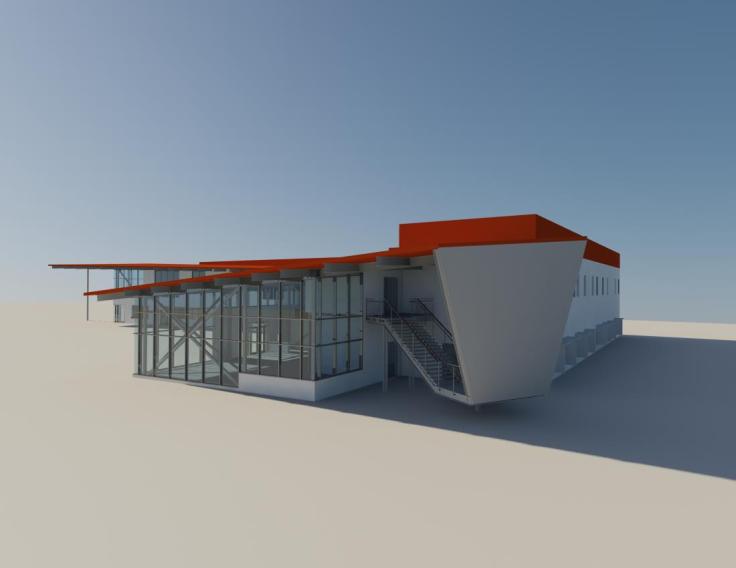
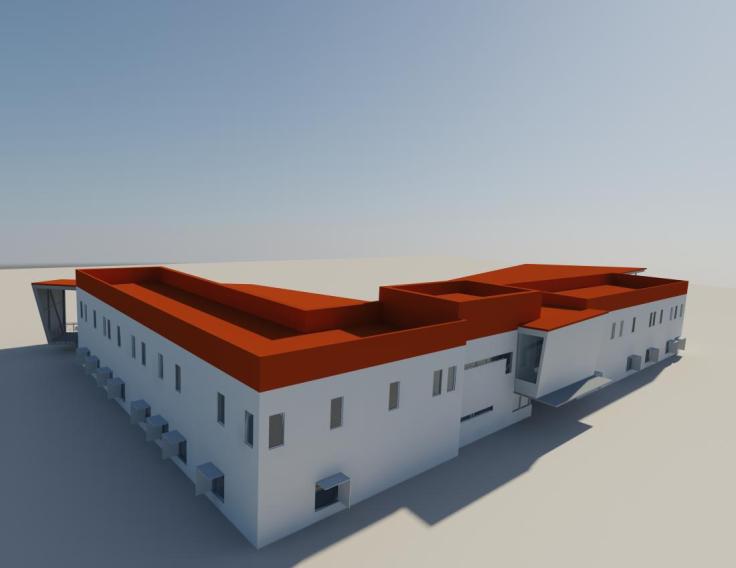
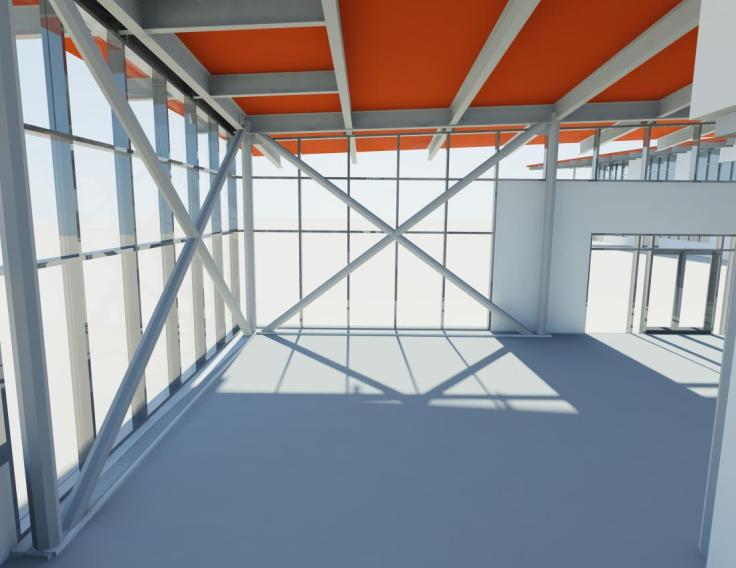
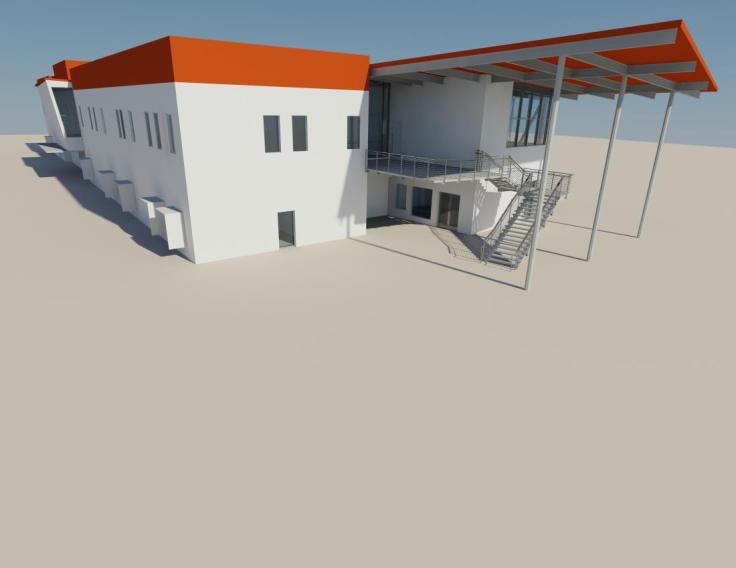
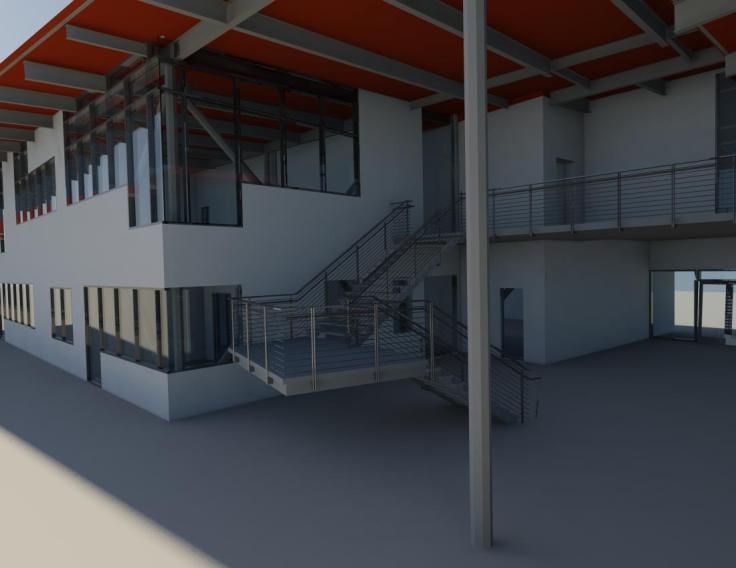
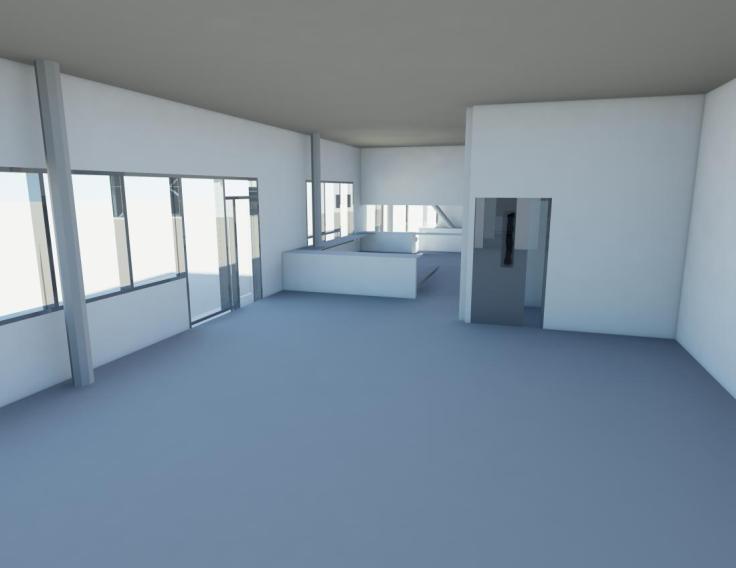
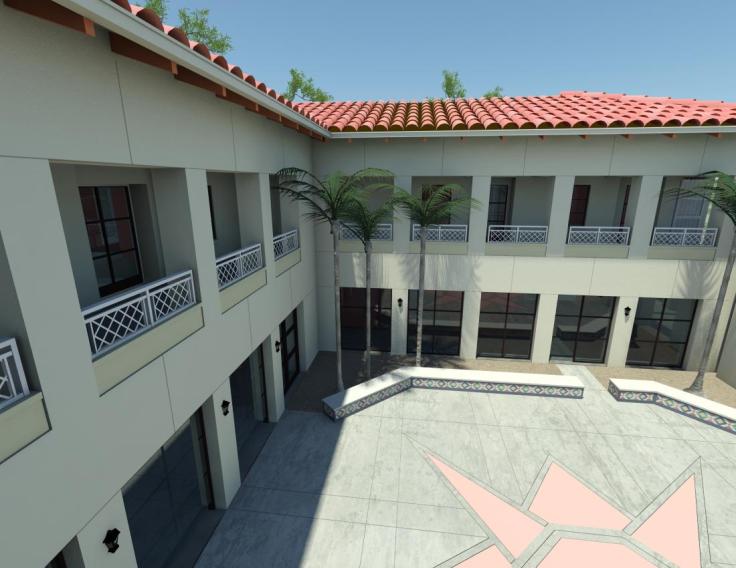
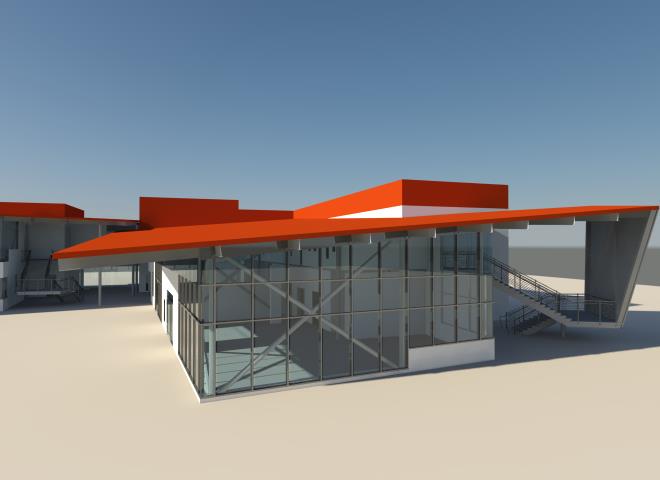
I was an Architecture Intern at e7 Architecture Studio where we created from blue-prints (2D) AutoCAD Architecture 3D BIM models for the Los Angeles College District 9 campuses. These CAD/BIM models were created in AutoCAD Architecture and rendered in 3DS MAX Design. 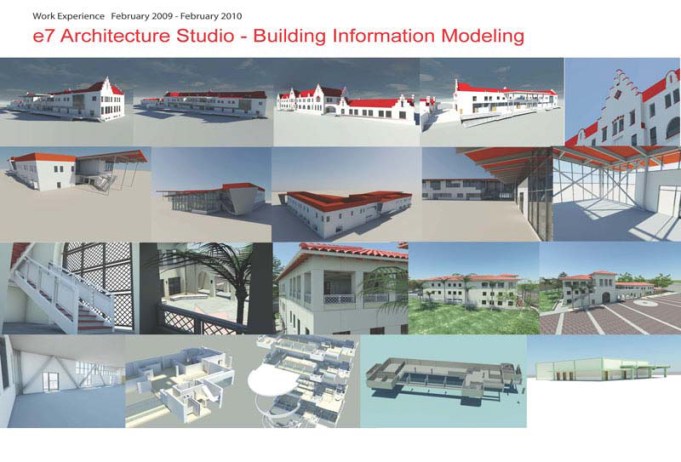


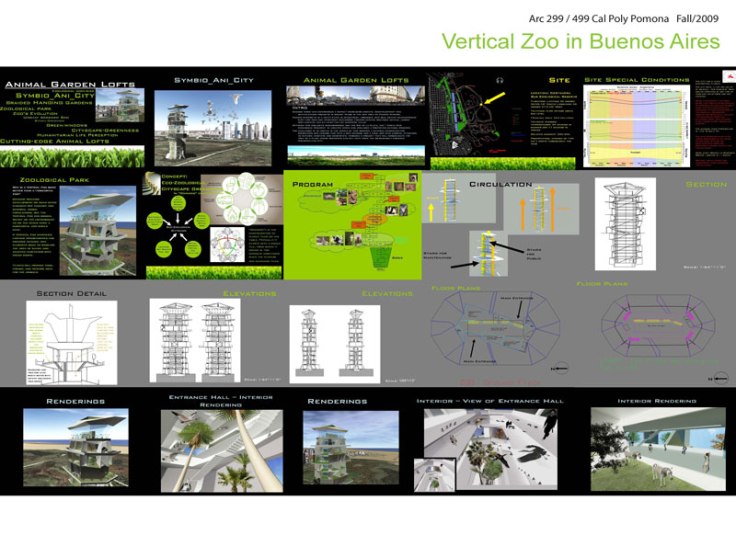
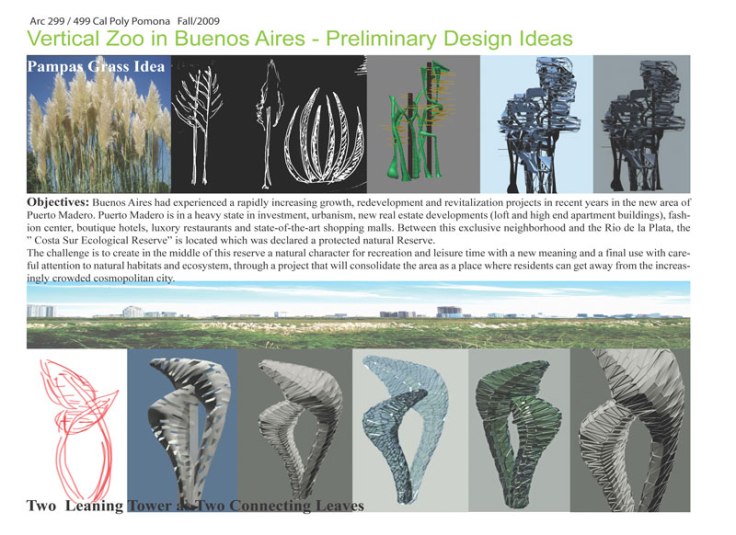
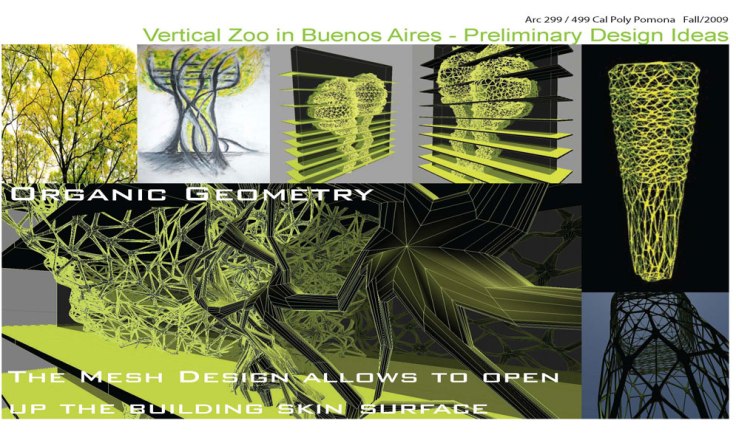
School Project 2008-2009
Residential project 2013
Architecture design and drafting was done in SketchUp, then it was rendered with V-ray.
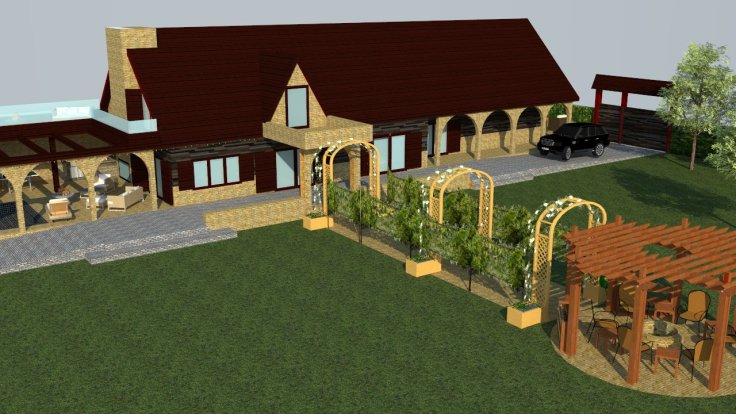

 3D Modeling and Architectural Visualization
Leave a comment